
Customer support teams often know what went wrong with an order, but struggle to explain why it happened in a way customers understand and trust. Order data is scattered across fulfillment systems, payment tools, carriers, and inventory platforms. This forces agents to piece together explanations manually, increasing resolution time and customer frustration.
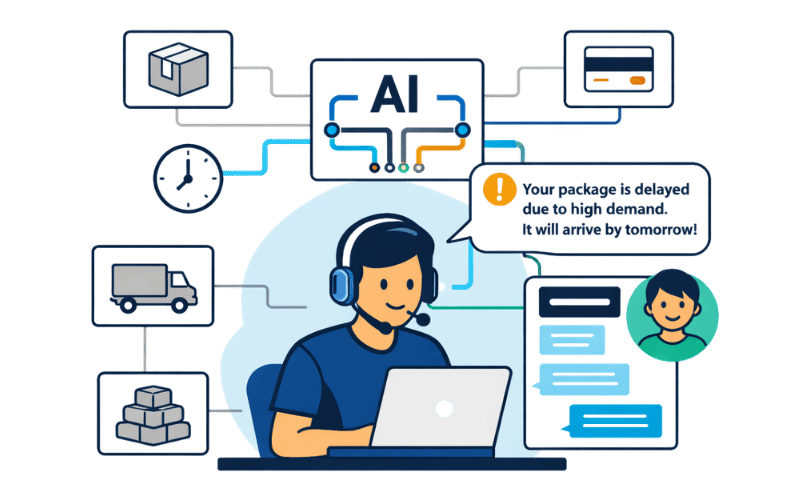
AI agents solve this by connecting order data across systems and generating clear, customer‑ready explanations in real time. Instead of vague responses or scripted apologies, support teams can confidently explain what happened, what is being done, and what the customer should expect next.
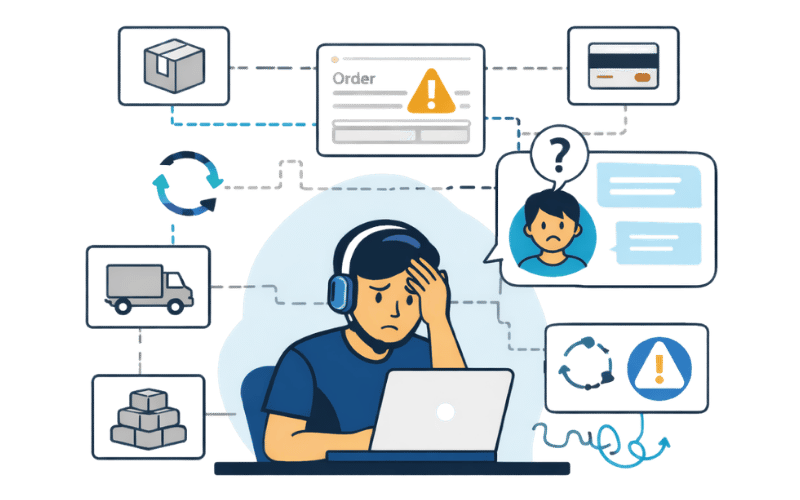
Support agents face several structural challenges when handling order‑related questions:
As a result, agents rely on partial information, escalation loops, or generic responses that do not fully resolve customer concerns.
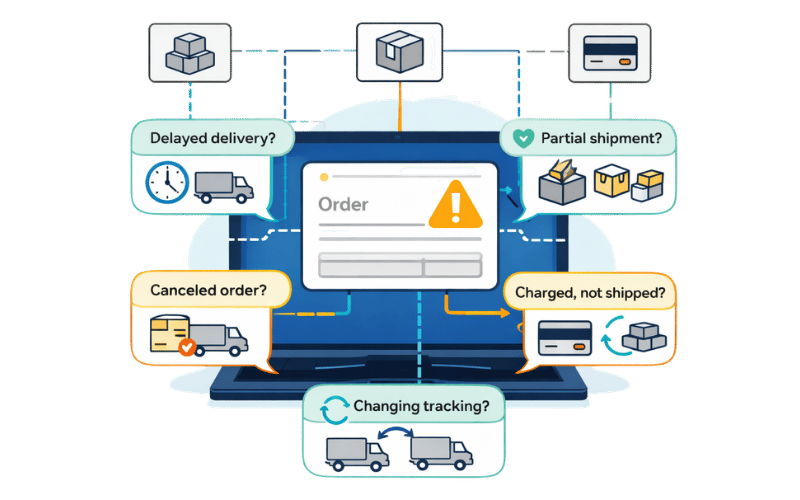
Support teams frequently handle questions such as:
Each question requires correlating fulfillment, inventory, payment, and logistics data before a clear explanation can be given.
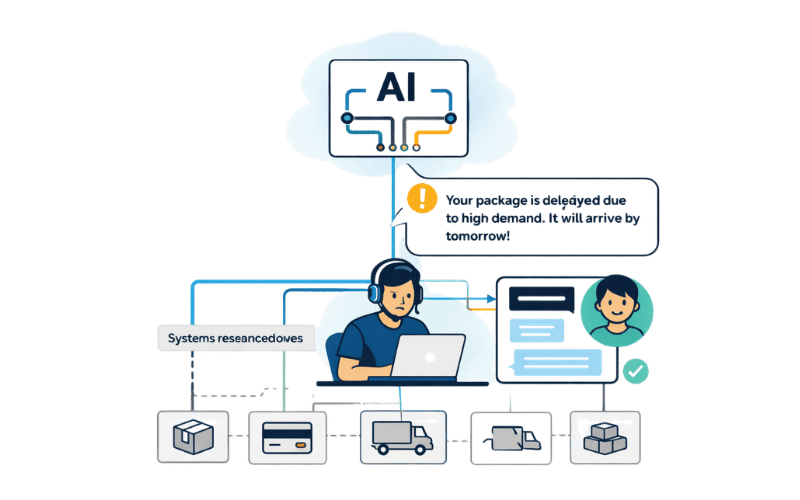
AI agents act as a reasoning layer on top of fragmented order systems. They do not replace workflows. They explain them.
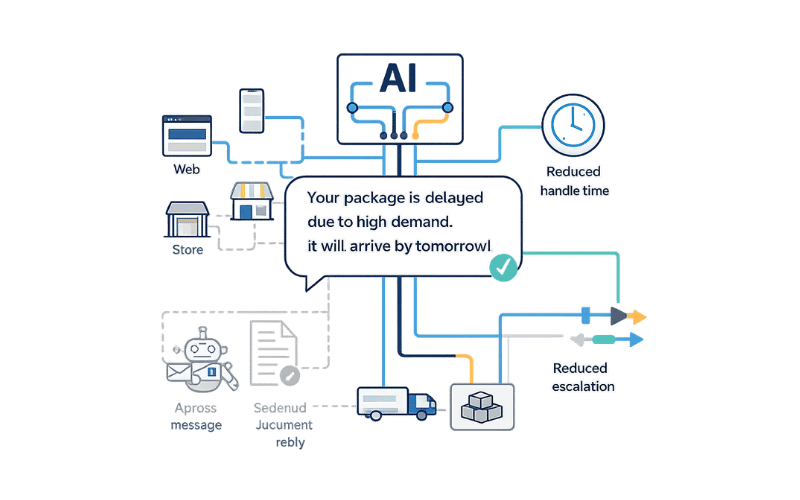
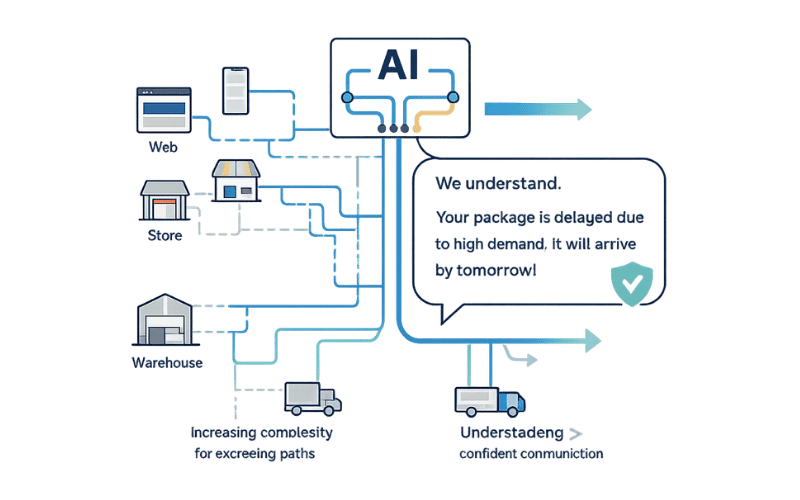
AI agents pull data from order management systems, warehouse tools, payment platforms, and carrier feeds into a single contextual view. Agents no longer switch tabs or manually reconcile timelines.
This allows support teams to understand the full order story before responding.
Internal system statuses are not customer‑friendly. AI agents convert operational signals into clear explanations customers can understand.
Instead of reading raw error codes or logistics terms, agents receive plain‑language summaries tailored for customer communication.
AI agents analyze patterns across similar orders to determine the most likely cause of an issue. This prevents agents from guessing or escalating unnecessarily.
Concrete example:
If an order is delayed, the AI agent can explain that inventory was available at purchase but became unavailable during fulfillment due to a warehouse transfer delay, and that a new ship date has been confirmed.
Whether the customer contacts support via chat, email, or phone, AI agents ensure the explanation remains consistent. This reduces confusion and prevents contradictory responses from different agents.
This is not automated customer messaging without human review.
It does not replace support agents or force scripted replies.
It does not hide issues or deflect responsibility.
AI agents support human agents by giving them accurate, explainable context so they can communicate clearly, honestly, and confidently with customers.
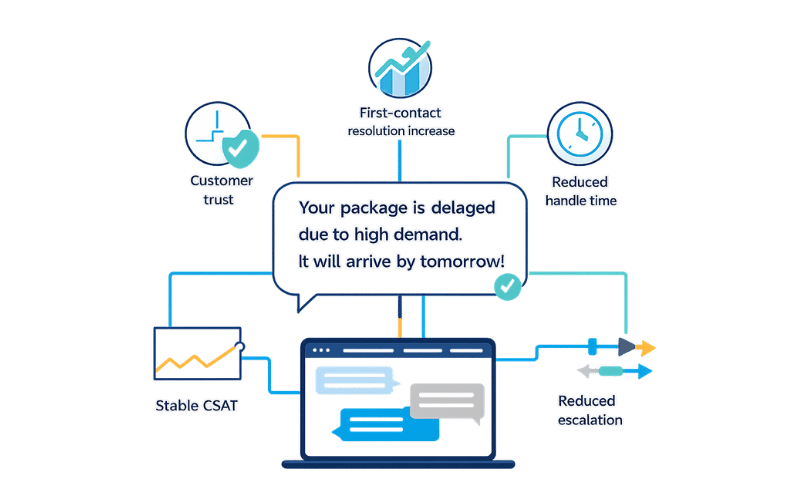
When support teams can clearly explain order issues:
Clear explanations matter more than speed alone.
As order complexity grows across channels and fulfillment partners, customer expectations rise. Customers do not just want updates. They want understanding.
AI agents enable support teams to move from reactive problem handling to confident, transparent communication that strengthens customer relationships, even when something goes wrong.
Clear explanations are the difference between a frustrated customer and a retained one. AI agents help support teams move beyond vague updates by connecting order data across systems and translating it into explanations customers can trust. By giving agents full context, root‑cause clarity, and consistent messaging, AI agents reduce confusion, shorten resolution times, and improve customer confidence even when orders do not go as planned.