
Transaction anomalies are one of the hardest operational challenges fintech teams face. Payments fail, amounts do not match, transactions appear duplicated, or alerts trigger without clear reasons. Investigating these issues usually means pulling data from multiple systems, validating assumptions, and manually reconstructing what happened. AI agents reduce this complexity by assembling transaction context automatically and guiding teams to the true cause faster.
AI agents help fintech teams investigate transaction anomalies by gathering transaction context across systems, summarizing risk signals, and explaining why activity appears unusual, without replacing human judgment.
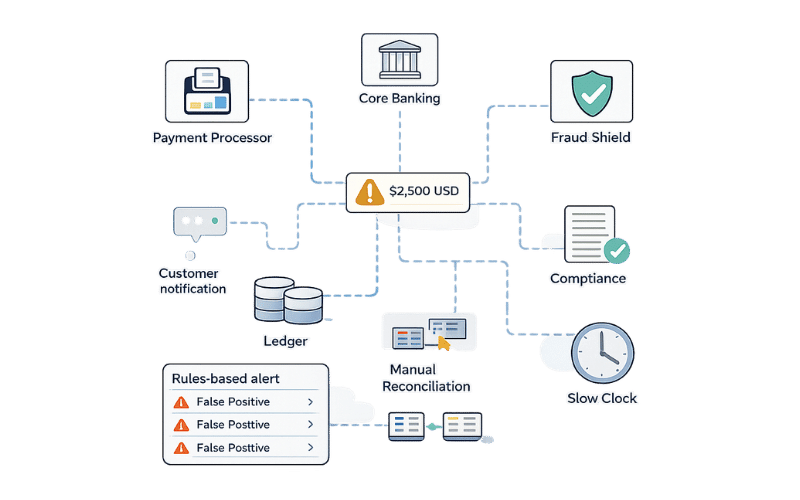
Fintech transaction flows span payment processors, core banking systems, fraud tools, ledgers, and compliance platforms. When something goes wrong, teams must manually connect fragmented data to understand the issue.
Common challenges include:
These inefficiencies increase operational risk and erode customer trust.
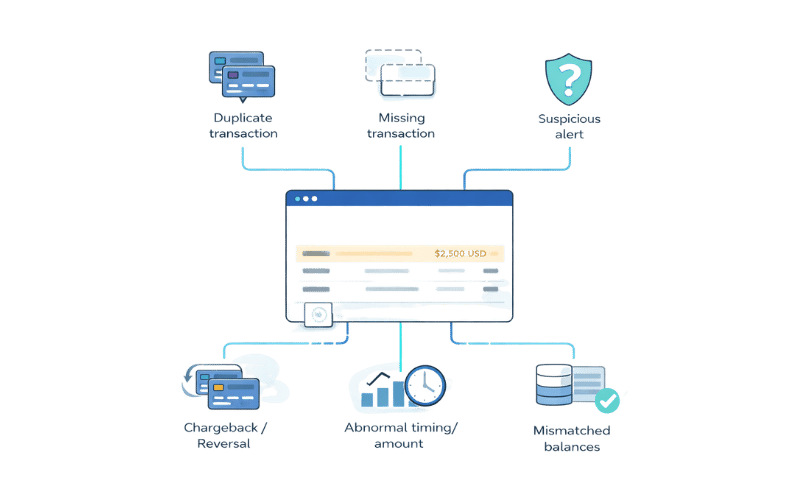
Fintech operations, risk, and compliance teams frequently investigate:
Each investigation often requires hours of manual review across systems.
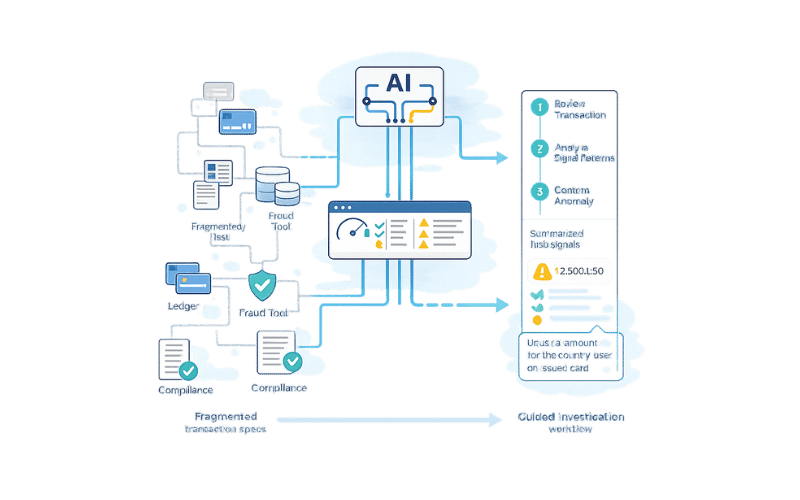
AI agents change investigations from reactive data hunts into guided, context‑aware workflows.
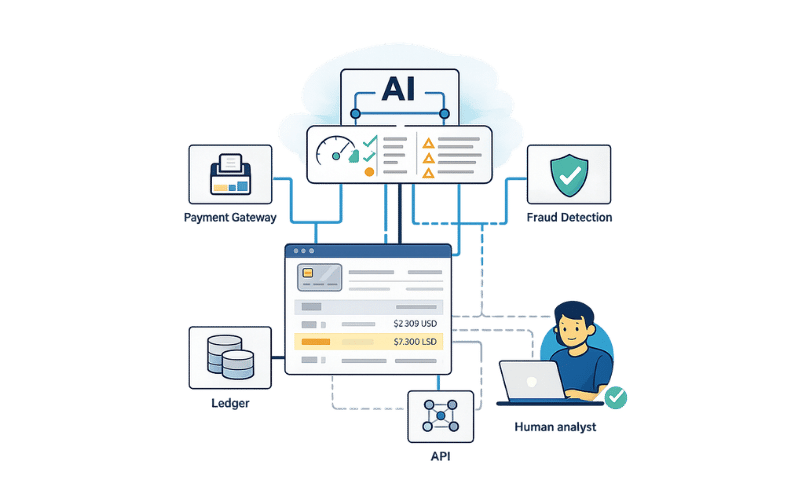
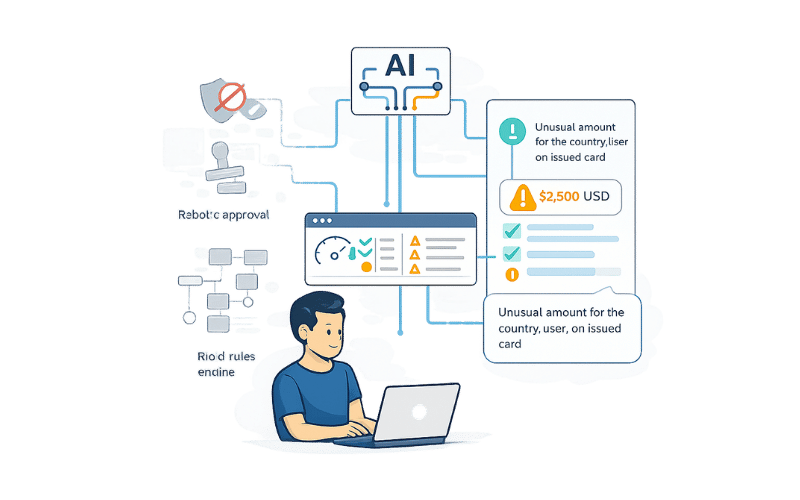
AI agents automatically pull relevant data from payment gateways, ledgers, fraud tools, and account systems. Instead of switching between dashboards, teams see a unified transaction timeline that shows what happened and when.
Rather than stopping at “an anomaly occurred,” AI agents analyze patterns, dependencies, and historical behavior to identify likely root causes. This helps teams distinguish system issues, customer behavior, and external processor failures.
By learning from historical outcomes and investigation results, AI agents help suppress low‑risk alerts. This allows teams to focus on genuinely anomalous transactions instead of chasing noise.
AI agents recommend next actions based on the anomaly type, such as verifying settlement files, checking processor responses, or reviewing account‑level activity. This reduces reliance on tribal knowledge and speeds up resolution.
Once an issue is understood, AI agents help summarize findings in plain language. This supports faster internal reporting, regulator responses, and customer communications.
A payment is flagged for unusual velocity and amount. Instead of pulling data from the ledger, KYC system, and risk tool manually, the AI agent assembles the transaction history, customer profile, recent behavioral changes, and prior alerts into one explanation. The analyst reviews the context, adds judgment, and resolves the case faster with a complete audit trail.
This is not a rules engine that automatically blocks transactions or a replacement for fraud analysts. AI agents do not make final decisions, override controls, or approve activity on their own. They also do not introduce new risk logic. Their role is to reduce investigation time by organizing information, explaining why activity looks anomalous, and supporting human‑led decisions with clearer context.
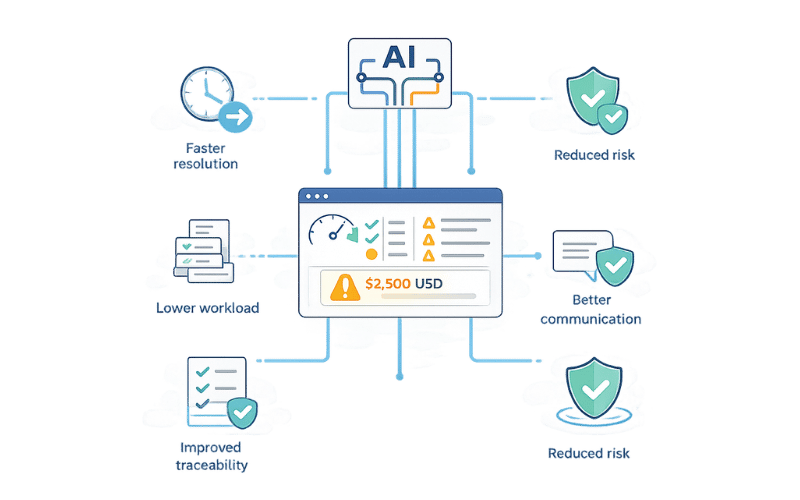
Teams using AI agents for transaction anomaly investigations benefit from:
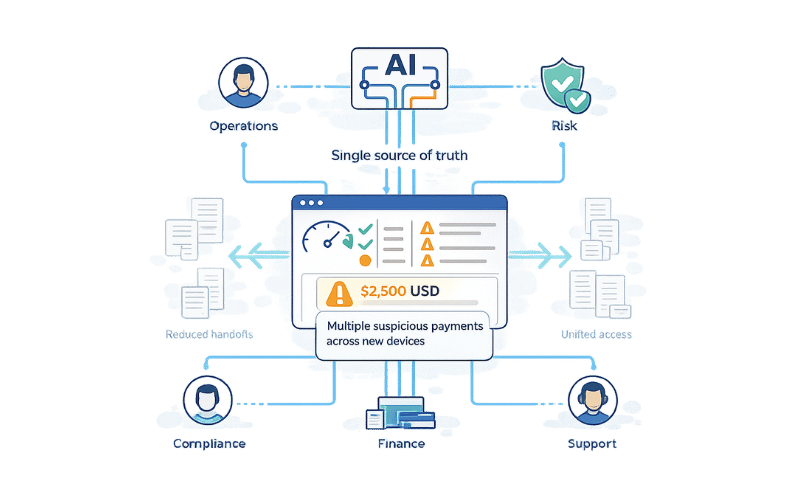
Transaction anomaly investigations rarely stay within one team. Operations, risk, compliance, finance, and support often need the same information at different stages. AI agents act as a shared investigative layer by maintaining a single source of truth for each anomaly.
Instead of forwarding screenshots or re‑explaining findings, teams can access the same transaction context, investigation notes, and root‑cause summaries. This reduces handoffs, prevents misalignment, and ensures decisions are based on consistent information.
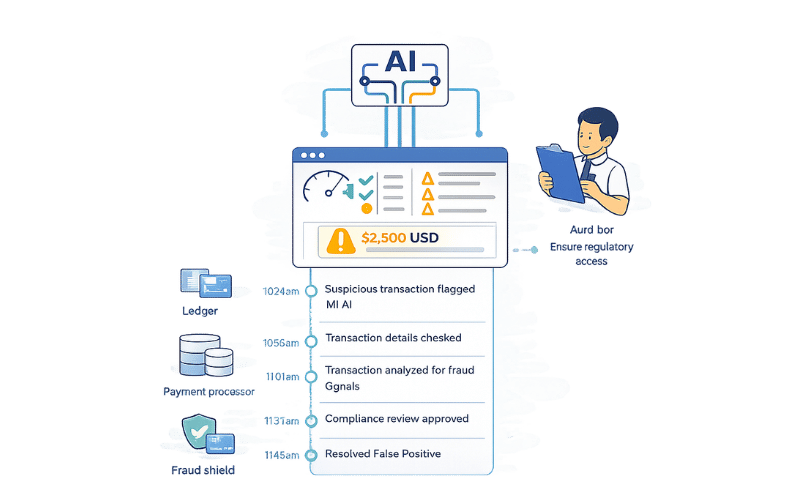
Every transaction anomaly investigation may later be reviewed by auditors or regulators. AI agents automatically document investigation steps, data sources reviewed, decisions made, and resolution timelines.
This creates a structured audit trail without extra manual work. When regulators request evidence, teams can quickly demonstrate how anomalies were identified, investigated, and resolved, reducing compliance stress and last‑minute reporting efforts.
Transaction anomaly investigations slow fintech teams down when context is scattered across systems. AI agents change this by assembling the right information, explaining risk signals clearly, and supporting faster, defensible decisions. Instead of spending time gathering data, teams focus on judgment, compliance, and resolution, with investigations that are easier to explain, review, and audit.