
AI Agents for Fintech Operations Teams Handling Compliance, Reconciliation, and Reporting

AI agents help fintech operations teams reduce manual work and operational risk by answering compliance and reconciliation questions, surfacing transaction context, and supporting reporting workflows using permission controlled data from connected fintech systems.

They are most effective when integrated with core fintech platforms such as payment processors, ledgers, compliance tools, and internal reporting systems.
AI Agents for Fintech Operations Teams Handling Compliance, Reconciliation, and Reporting

Where fintech operations teams lose time today

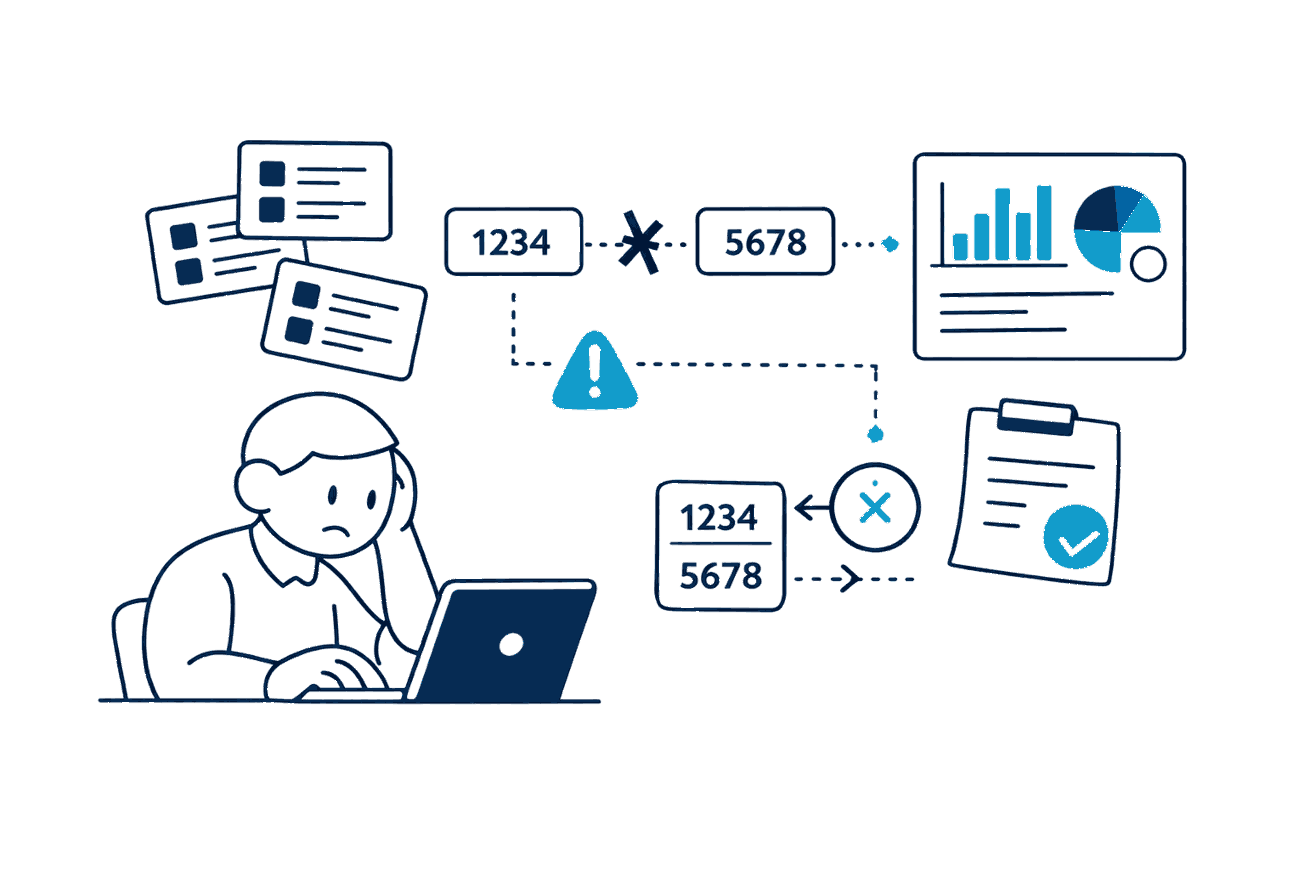
Fintech operations teams work in environments where accuracy, traceability, and speed all matter at once. Yet much of the work is slowed by system fragmentation and manual verification.

Common challenges include:
  • Reconciling transaction data across multiple ledgers and payment systems
  • Manually validating compliance checks and audit trails
  • Pulling reports from different tools for regulators and internal teams
  • Investigating discrepancies without a single source of truth
  • Repeating the same checks across teams and reporting cycles

The issue is not a lack of systems. The issue is that information is scattered and difficult to access when decisions need to be made.
What an AI agent means for fintech operations teams

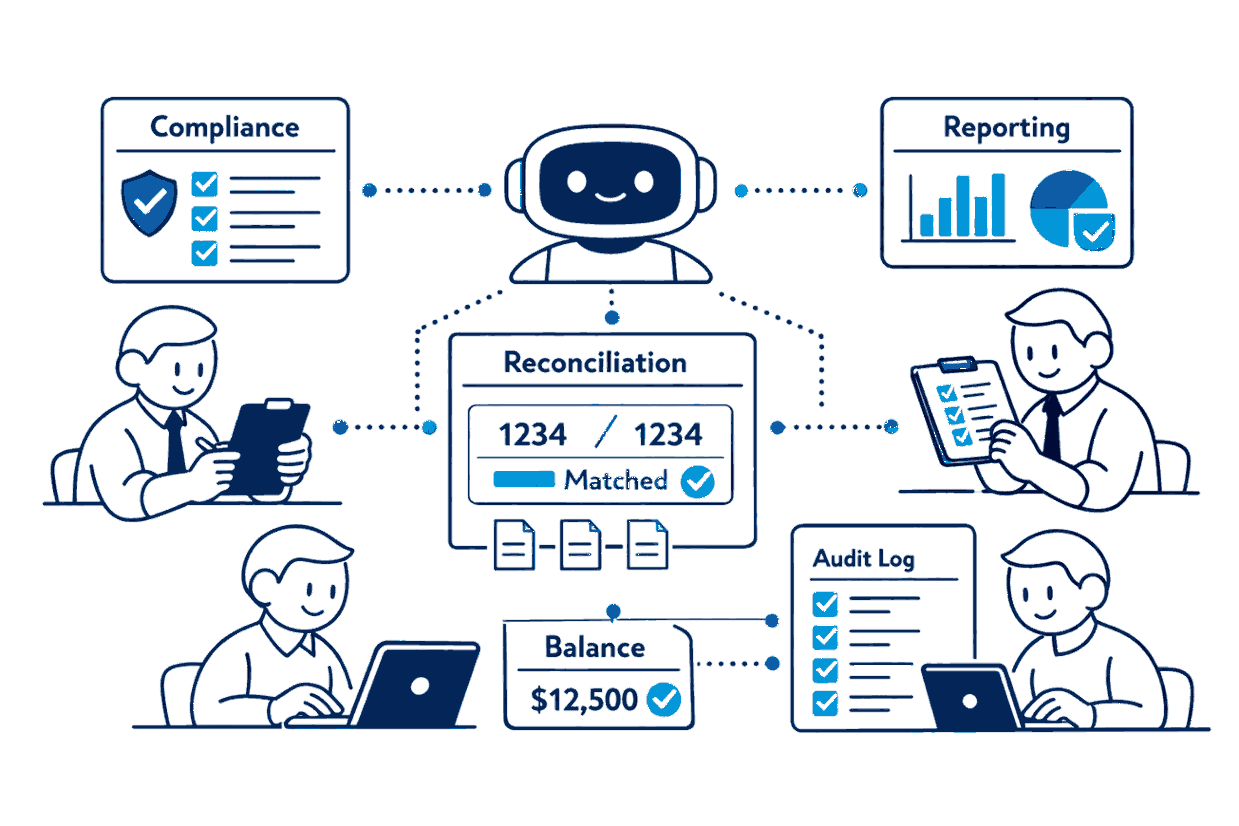
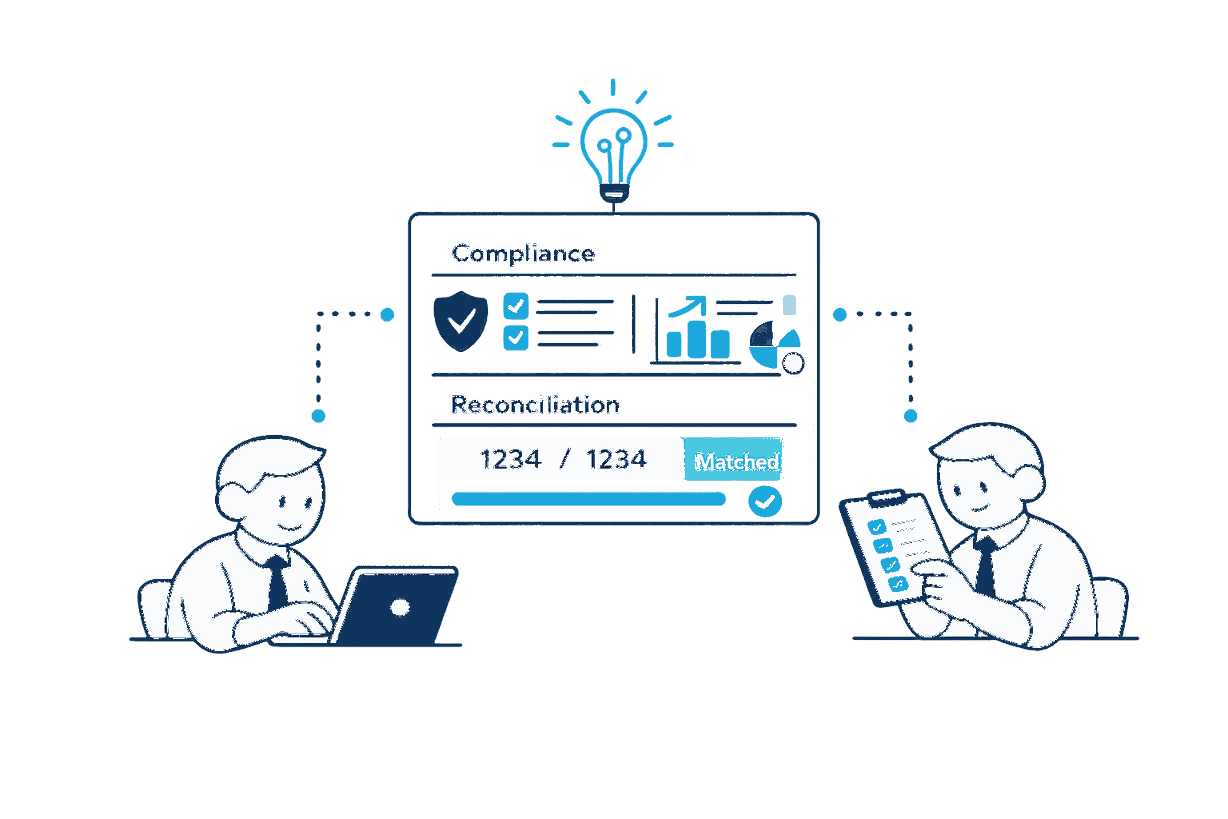
An AI agent in a fintech operations context is a software system that retrieves financial and compliance data, understands operational context, and supports actions across connected fintech systems using strict access controls.

Fintech operations teams use AI agents to:
  • Retrieve transaction and ledger context without manual queries
  • Surface compliance status and exception details quickly
  • Support reconciliation workflows across payment and banking systems
  • Assist with reporting preparation using approved data sources
  • Reduce repeated follow ups and internal clarification requests

Instead of checking multiple tools, teams ask one operational question and receive a clear, auditable response.
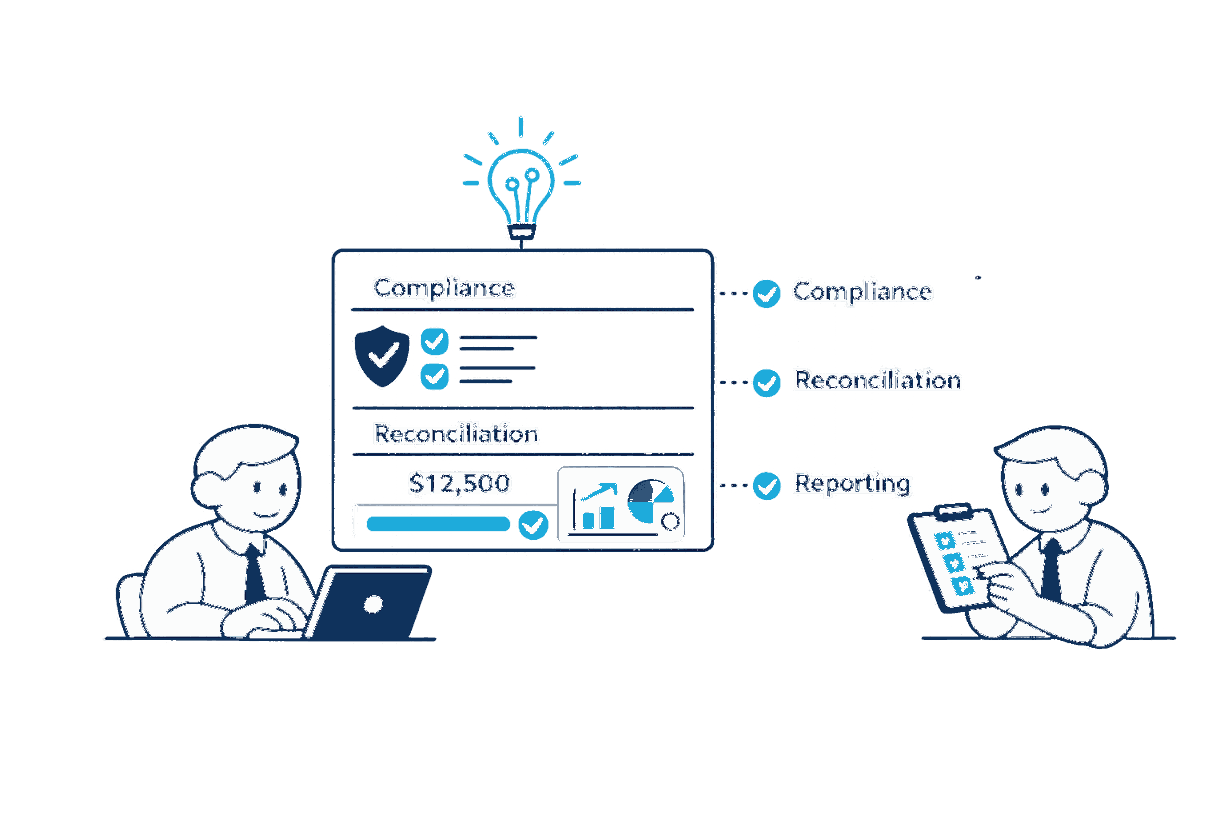
Logicon implements AI agents for fintech operations teams by integrating systems, defining access boundaries, and designing workflows that align with regulatory and financial controls.

How AI agents support compliance, reconciliation, and reporting

AI agents reduce daily operational friction by centralizing access to financial and compliance data while respecting role based permissions.
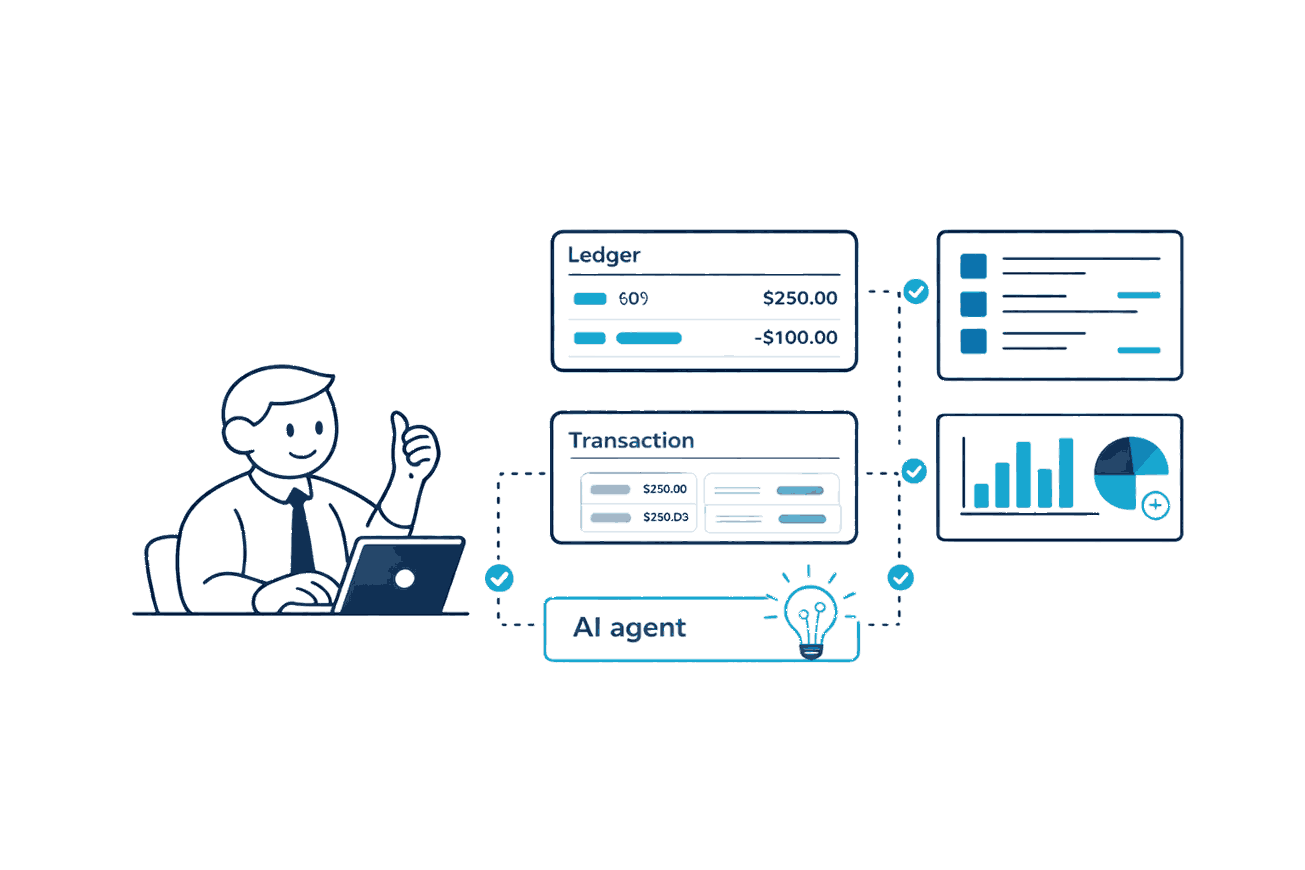
In practice, AI agents can:
  • Answer compliance related questions using live system data
  • Surface reconciliation status across ledgers and payment platforms
  • Highlight discrepancies and supporting context for investigation
  • Assist operations teams during reporting cycles
  • Reduce time spent preparing information for audits and reviews

An operations analyst can ask whether a transaction batch was reconciled and whether any exceptions remain. The AI agent pulls the answer from connected systems instantly, without manual exports or cross checks.

Compatibility with existing fintech system

Compatibility with existing fintech systems

AI agents are designed to work with existing fintech infrastructure. They do not replace core systems or bypass controls.

Typical integrations include:
  • Payment processors and transaction platforms
  • Core banking and ledger systems
  • Compliance and risk monitoring tools
  • Internal reporting and data warehouses
  • Secure workflow and automation platforms

All access is permission based, logged, and auditable.

Why this matters for fintech organizations

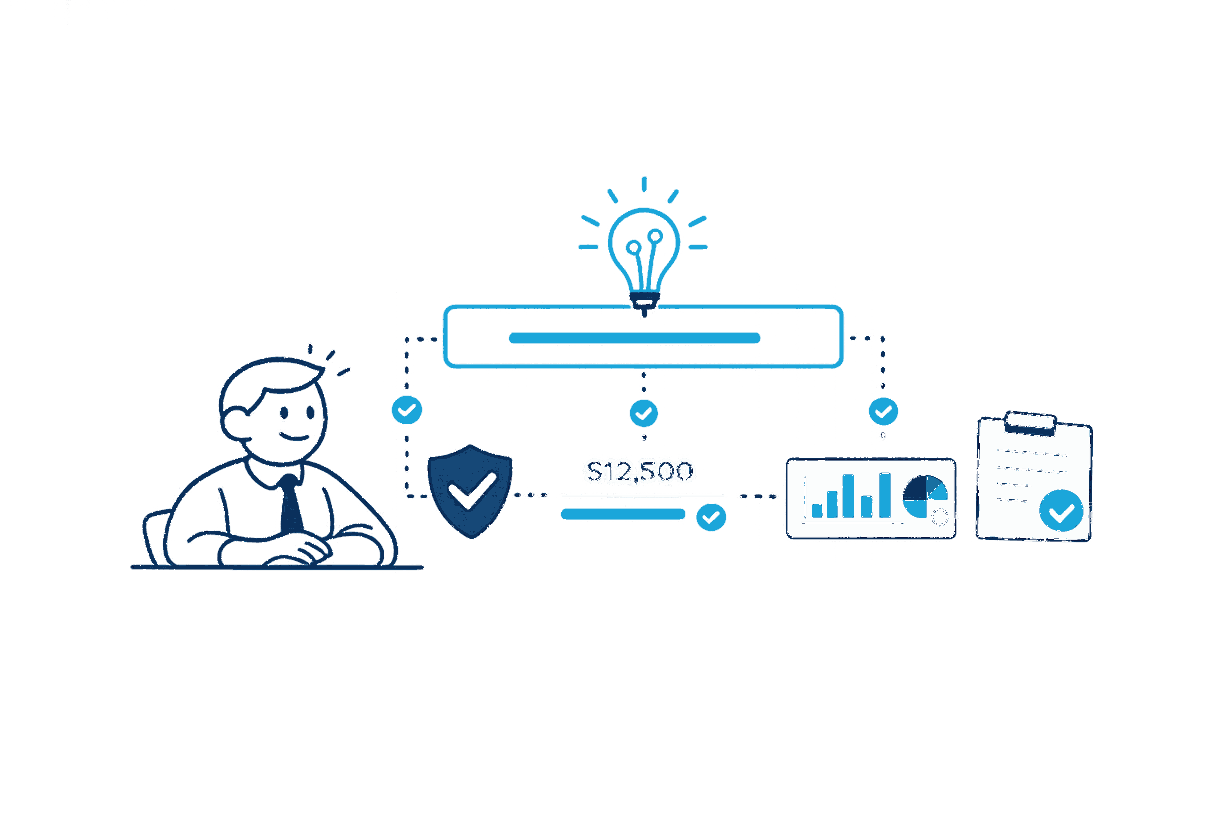
Fintech organizations operate in regulated environments where reporting accuracy, reconciliation speed, and audit readiness directly affect trust and growth.

AI agents help operations teams by:
  • Reducing manual reconciliation effort
  • Improving consistency in compliance checks
  • Increasing visibility into transaction status
  • Shortening reporting cycles
  • Lowering operational risk without increasing headcount

This allows teams to focus on oversight and decision making instead of data gathering.
When fintech operations teams should consider AI agents

Fintech teams typically consider AI agents when reconciliation delays increase, reporting cycles become harder to manage, or compliance questions require repeated manual investigation.

If teams rely on exports, spreadsheets, or tool switching to validate routine operational questions, AI agents provide a safer and more scalable alternative.
Using AI agents for fintech operations teams

AI agents can be deployed without disrupting existing fintech systems and can support operations, compliance, and finance teams simultaneously.

Logicon works with fintech organizations to design and implement AI agents that integrate securely with existing tools, with a strong focus on data accuracy, auditability, and regulatory alignment.
Using AI agents for fintech operations teams

Questions retail leaders ask about AI agents at scale

How do AI agents help fintech compliance teams?
They surface compliance status, supporting data, and exception details using approved systems and access controls.
Yes. AI agents operate using permission based access and only approved data sources.
No. They work on top of existing systems to provide faster access to reconciliation status and context.

Accuracy depends on system integrations and permissions. Properly implemented AI agents rely on real time, approved data.

Who typically implements AI agents for fintech operations teams?

Final takeaway for fintech operations leaders

Fintech operations teams are expected to move fast while leaving no room for error. When reconciliation, compliance checks, or reporting require manual effort across multiple systems, risk quietly increases.

AI agents give teams a way to regain visibility and control without changing their core infrastructure. If your operations depend on accurate answers under pressure, AI agents are no longer optional. They are foundational.