
AI agents help retail teams get accurate answers faster and reduce repetitive work across ecommerce, support, and internal systems.
They work best when connected to live data like orders, inventory, customer history, and policies, and when they support real workflows instead of replacing people.

Retail operations have become fragmented.
Customer questions come through multiple channels. Data lives in different systems. Teams jump between tools just to answer one basic question.
Most retail leaders see the same issues:
The problem isn’t lack of data.
The problem is access, speed, and context.
An AI agent is a software system that retrieves information, understands business context, and takes actions across connected retail tools using live, permission, controlled data.
In retail, AI agents are used to:
Instead of switching systems, teams ask one question and get a reliable answer.
Logicon builds and implements these AI agents by connecting retail systems, defining data access rules, and designing agentic workflows that align with how retail teams actually operate day to day.
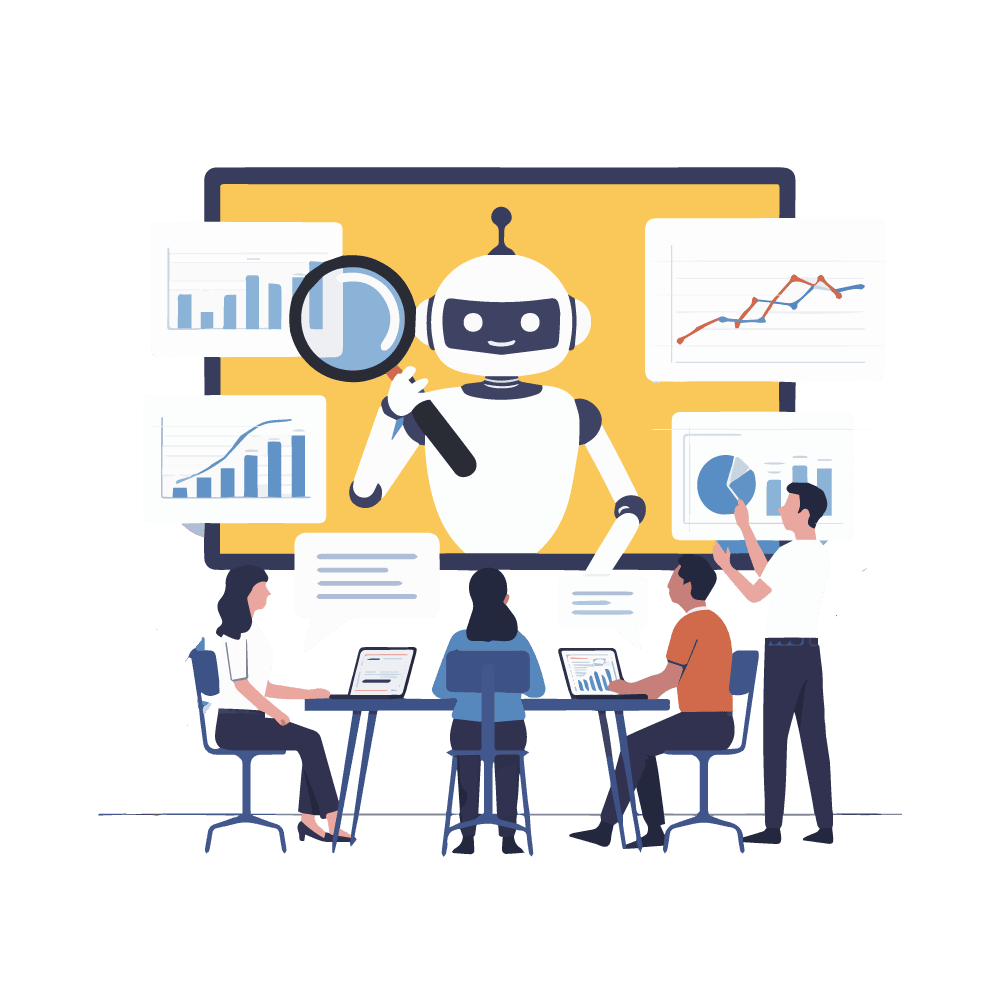
AI agents reduce friction in daily retail operations by centralizing knowledge and automating routine actions.
In practice, AI agents can:
This allows retail teams to focus on resolution, not searching.
For example, a support agent can ask, “Where is this customer’s order and has it been returned?” and get an instant answer pulled from Shopify and Zendesk.
The agent responds immediately without switching tools or escalating internally.
AI agents are designed to sit on top of your current retail stack.They work by retrieving live data from your existing retail systems, not by guessing or relying on static documents.
Common integrations include:
The agent retrieves data in real time, based on permissions you control.


Retail operates at high volume and high speed. Small inefficiencies multiply quickly.
AI agents help retail businesses by:
This is where AI becomes operational, not experimental.
They reduce time spent searching for information and help teams act faster with better context across systems.
They scale instantly, helping teams manage spikes in inquiries without adding headcount.
Yes. They can retrieve information from systems used by ecommerce, support, and store teams.
Accuracy depends on system integrations and data quality. Properly implemented agents rely only on approved, real-time data.
AI agents are usually implemented by AI engineering teams like Logicon that specialize in retail system integrations, access controls, and workflow automation.
If your retail teams spend too much time searching for answers, switching tools, or repeating the same work, AI agents are not a future idea. They are a practical solution available today.
The question is not whether AI agents fit retail.
The question is whether your operations can afford to run without them.
Retail businesses in Chicago face the same pressures as retail teams nationwide: high customer expectations, complex systems, and limited operational bandwidth.
AI agents can be deployed without replacing existing tools and can support both local and distributed teams across the United States.
The focus is practical improvement, not AI theater.
Logicon works with retail teams in Chicago and across the U.S. to design and implement AI agents that integrate with ecommerce, support, and internal systems, with a strong focus on accuracy, permissions, and real workflows.