
AI agents help large retail teams manage volume, speed, and operational complexity by delivering accurate answers and triggering actions across connected systems.
They work best when connected to live data such as orders, inventory, and customer history, and when they support real workflows rather than replacing people.
As retail businesses grow, complexity increases.
Customer volume rises. Channels multiply. Systems expand. More teams become involved in daily decisions.
Retail leaders operating in high-density markets like New York often experience:
The issue is not effort or tooling.The issue is coordination, speed, and shared access to reliable information.
An AI agent is a system that retrieves live information, understands operational context, and takes actions across connected retail platforms using permission-controlled data.
In large-scale retail environments, AI agents are used to:
Instead of slowing teams down as volume grows, AI agents help operations scale smoothly.
Logicon designs and implements these agents for retail businesses where accuracy, governance, and system coordination are critical.
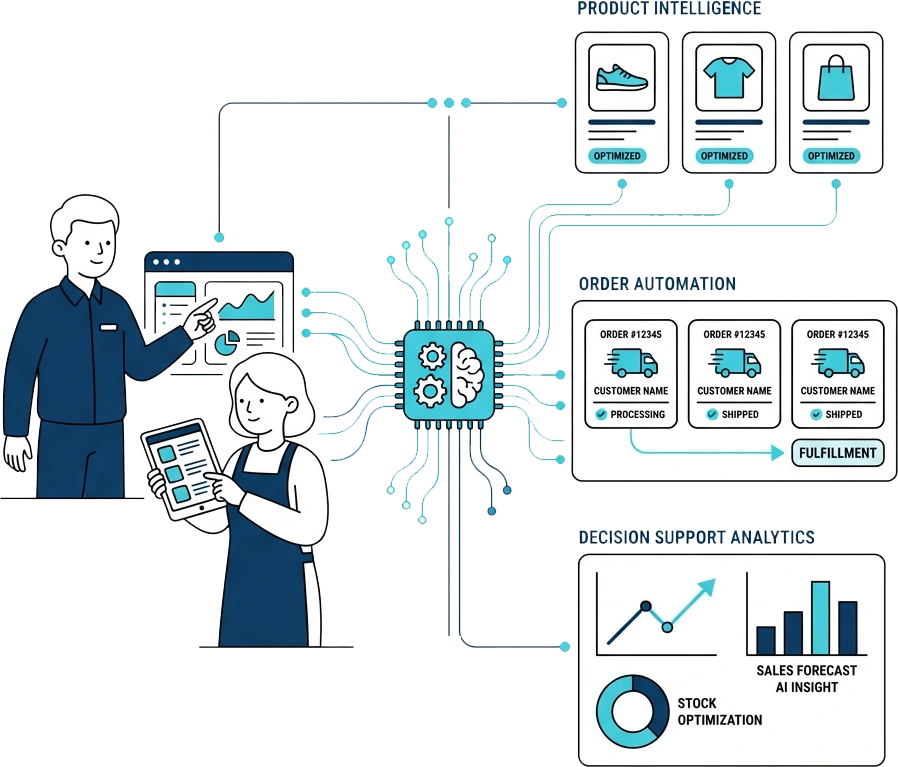
AI agents reduce operational pressure by handling volume without sacrificing accuracy or consistency.
In practice, they can:
For example, during an order surge, a support agent can ask, “Where is this customer’s order and has it been modified?” The agent returns an instant response using live data from Shopify Plus and Zendesk, without tool switching or internal escalation.
Yes. AI agents operate on top of existing enterprise retail stacks.
They retrieve live data from systems already in place rather than relying on static documents or assumptions.
Common integrations include:
All access is controlled through permissions defined by the business.
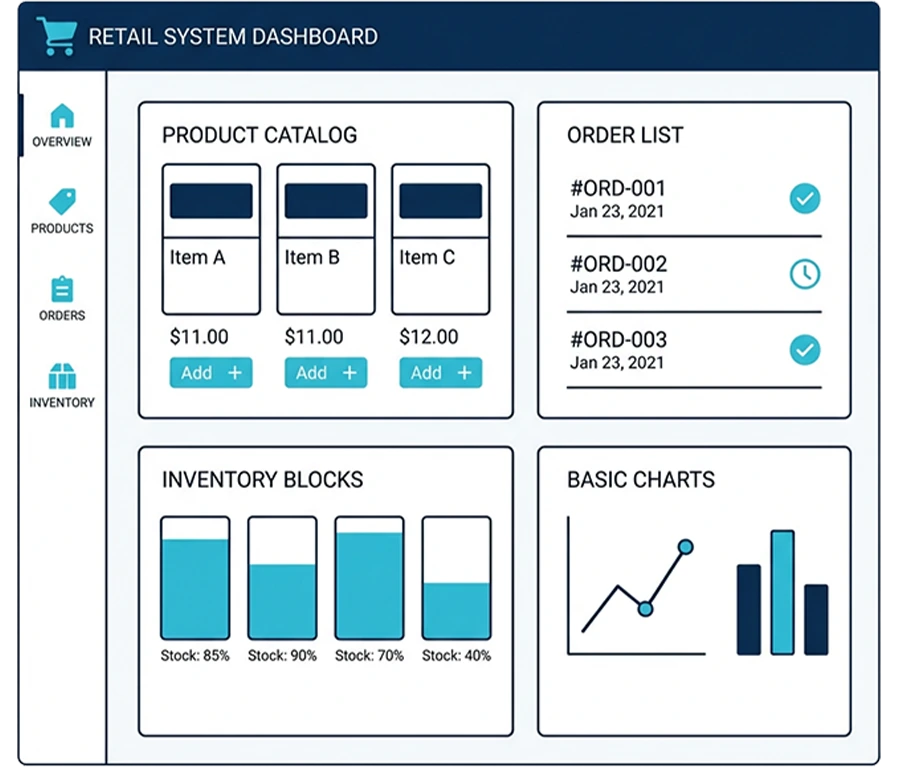
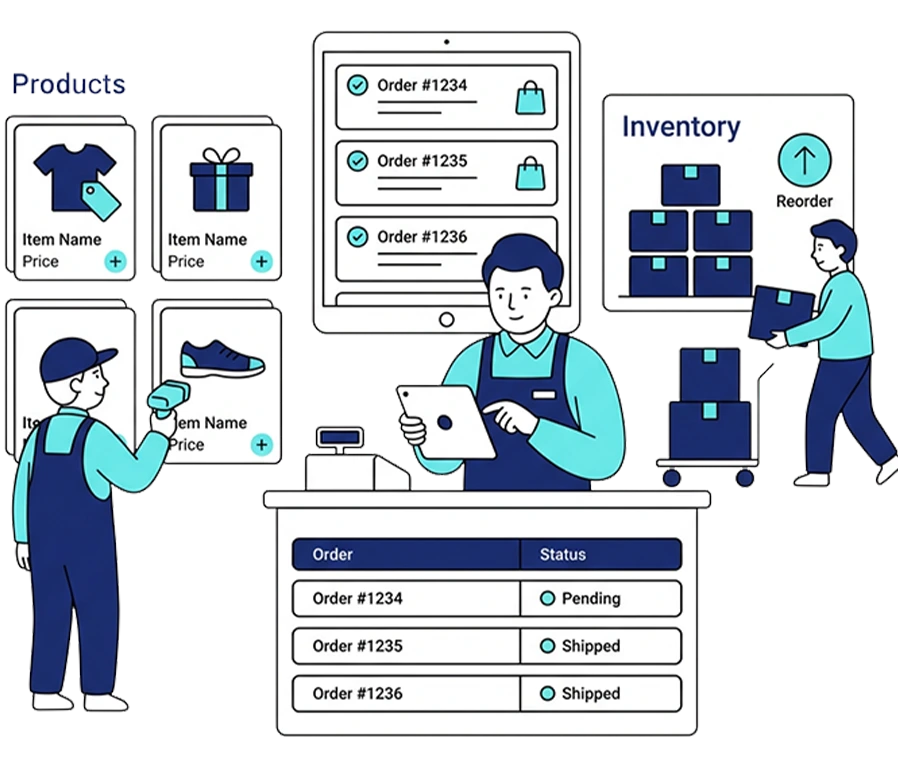
Retail businesses in New York operate under constant pressure.Customer expectations are high. Volume is dense. Delays are costly.
In these environments, small inefficiencies become operational risks.
AI agents help by:
This is where AI becomes infrastructure rather than experimentation.
Retail teams in New York often operate across multiple channels, locations, and systems at the same time.
AI agents can be deployed without replacing existing tools and can support both local teams and distributed operations across the United States.
The focus is practical stability, not automation for its own sake.
Logicon works with retail organizations in New York and across the U.S. to design and implement AI agents that integrate with ecommerce, support, and internal systems, with a focus on accuracy, permissions, and real workflows.
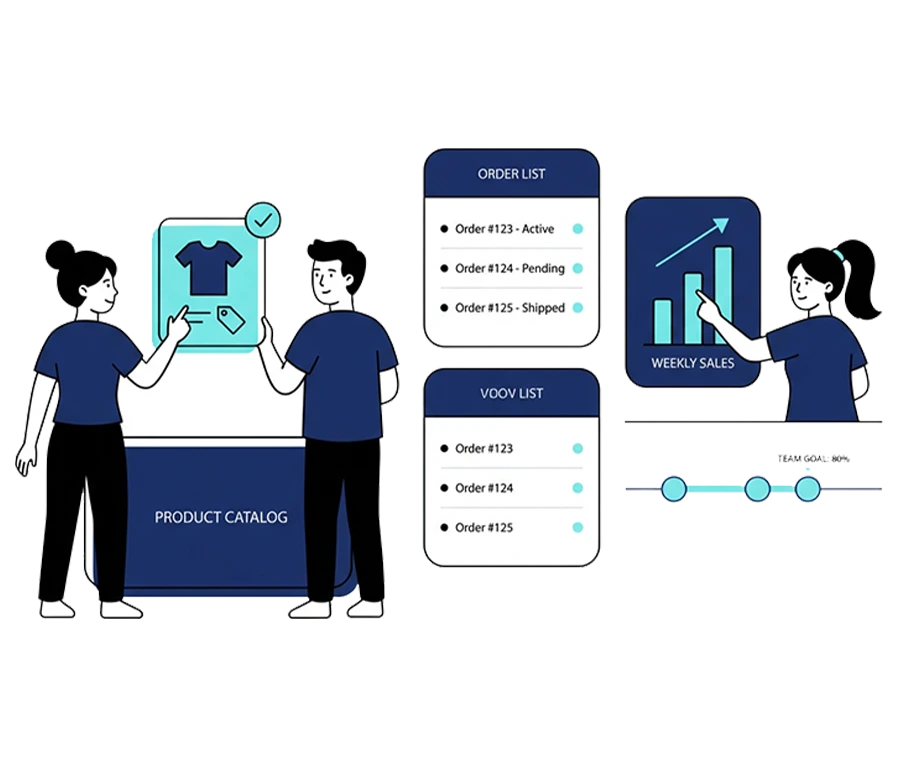
If your retail teams spend too much time searching for answers, switching tools, or repeating the same work, AI agents are not a future idea. They are a practical solution available today.
The question is not whether AI agents fit retail.
The question is whether your operations can afford to run without them.
Logicon works with retail organizations in New York and across the U.S. to design and implement AI agents that integrate with your existing systems.