
AI agents help healthcare teams spend less time searching for information and more time delivering care by answering operational questions, surfacing context, and supporting routine actions using live, permission-based data.
They are most effective when connected to systems healthcare staff already use, including clinical records, scheduling tools, and internal policies.
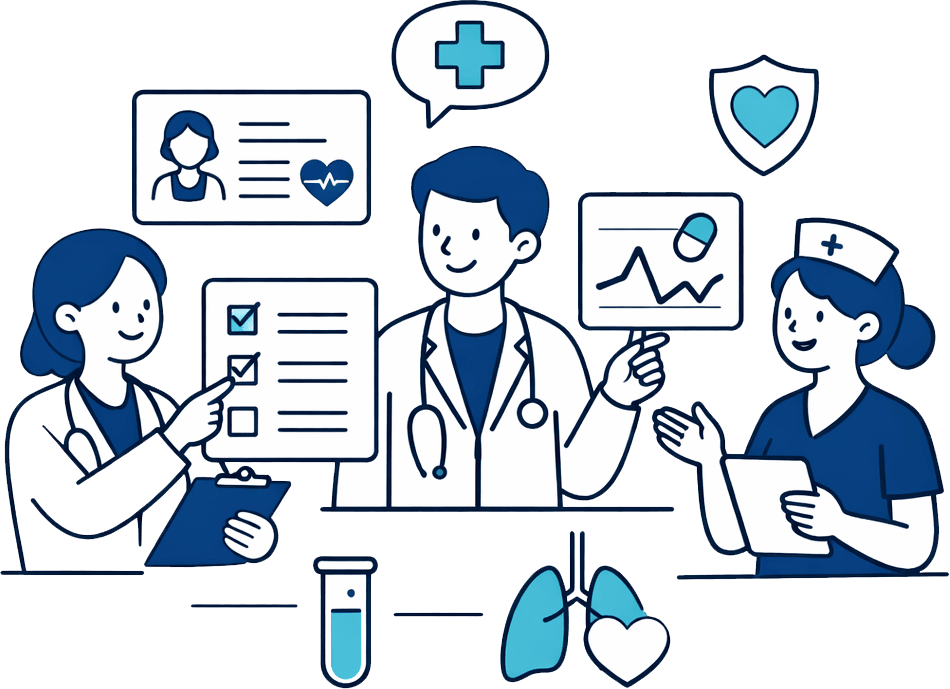
AI agents help healthcare teams spend less time searching for information and more time delivering care by answering operational questions, surfacing context, and supporting routine actions using live, permission-based data.
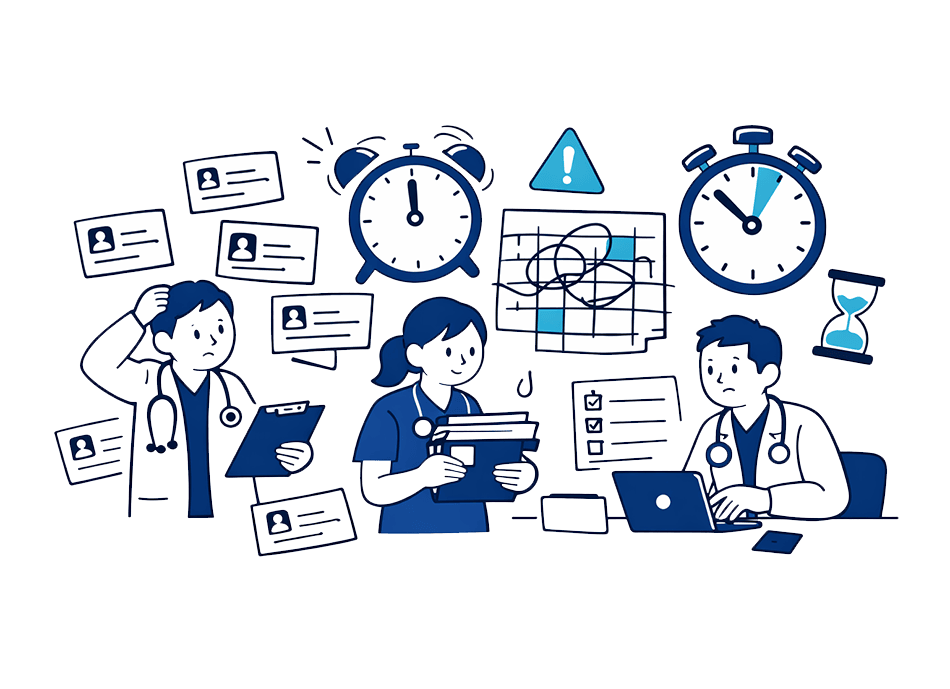
Healthcare teams operate in environments where delays and confusion carry real consequences.
Yet much of a team’s day is spent navigating systems rather than acting on information.
Healthcare leaders commonly see:
The challenge is not technology adoption.
The challenge is making information usable at the moment it is needed.
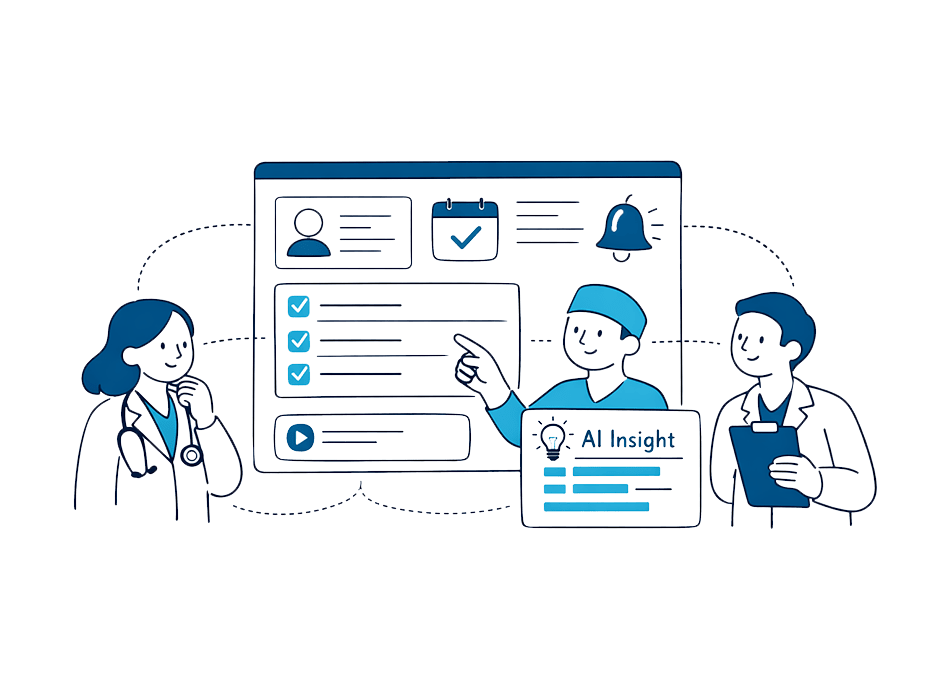
An AI agent in a healthcare context is a software system that retrieves information, understands operational or patient‑related context, and takes actions across connected healthcare systems using permission‑controlled data.
Healthcare teams use AI agents to:
Instead of asking multiple systems, teams ask one question and receive a clear, context‑aware response.
Logicon implements AI agents for healthcare teams by integrating systems, defining access boundaries, and designing workflows that reflect real clinical and operational processes.
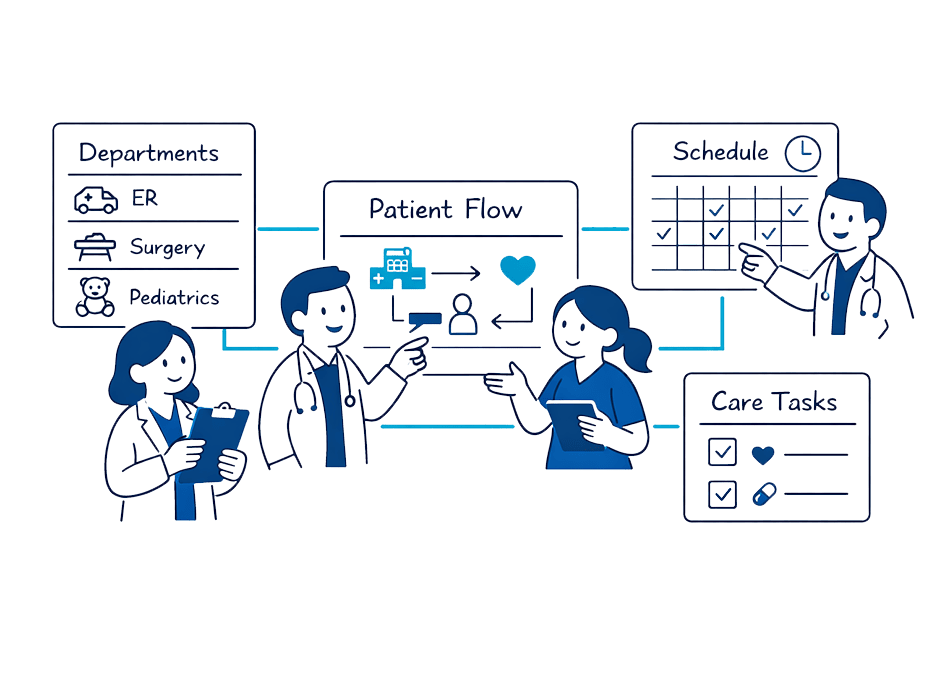
AI agents reduce day‑to‑day friction for healthcare teams by centralizing information and automating routine coordination tasks.
In practice, AI agents can:
This helps healthcare teams spend less time searching and more time delivering care.
For example, an operations coordinator can ask whether a patient appointment was confirmed and whether intake forms were completed. The AI agent pulls the answer instantly from scheduling and internal systems without manual checks.
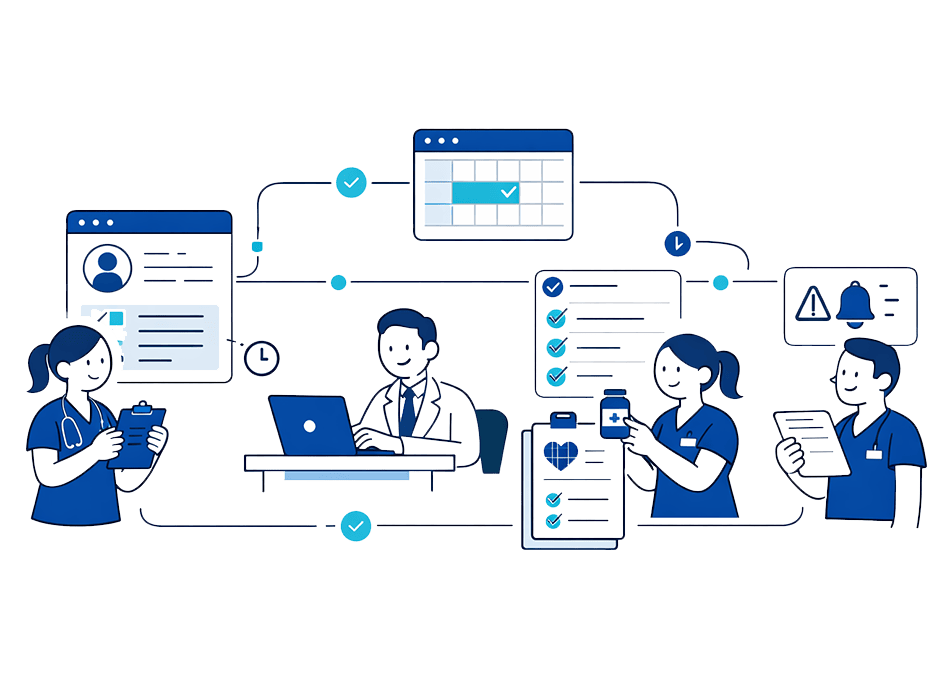
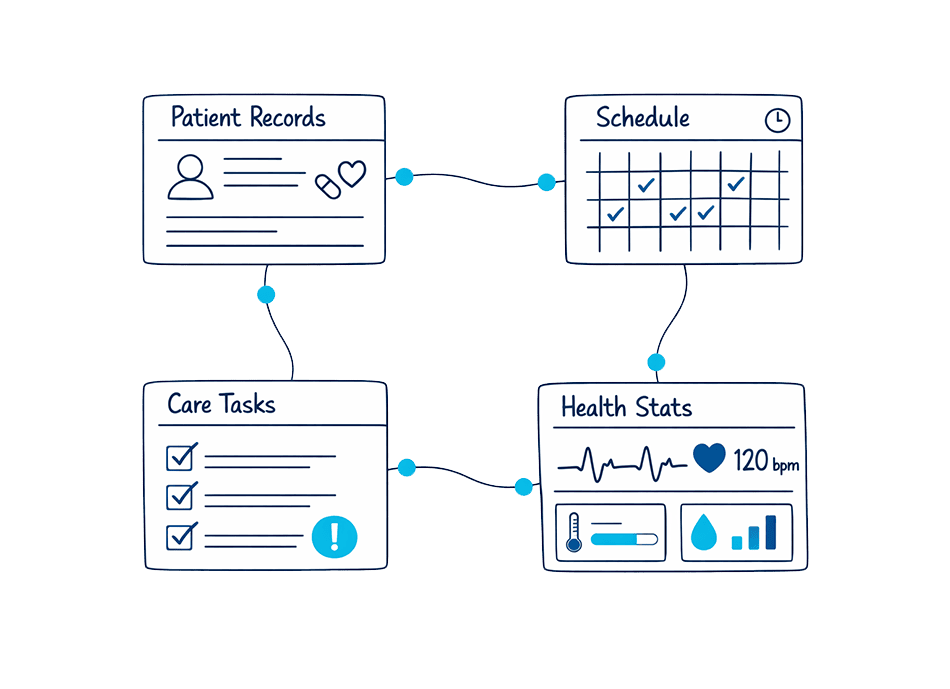
AI agents are designed to work with existing healthcare infrastructure.They do not replace core systems or introduce new interfaces for staff to learn.
Typical integrations include:
Electronic health record systems
Scheduling and patient management platforms
Internal policy and knowledge repositories
Secure communication tools
Workflow automation platforms
All access is controlled and auditable.
Healthcare teams operate under constant pressure, with limited time and resources.
AI agents help by:
This allows healthcare organizations to focus on care delivery, not system navigation.
Healthcare organizations face increasing expectations from patients, staff, and regulators.
AI agents can be deployed without disrupting existing systems and can support clinical, administrative, and operational teams across different care settings.
Logicon works with healthcare teams to design and implement AI agents that integrate securely with existing tools, with a strong focus on accuracy, permissions, and real-world workflows.
Accuracy depends on system integrations and permissions. Properly implemented AI agents rely only on approved, real-time data from connected healthcare systems.
No. AI agents support healthcare teams by handling repetitive administrative work and surfacing information. Clinical decisions and patient care always remain with human professionals.
If your teams spend too much time navigating systems, repeating administrative work, or chasing information, AI agents provide a practical way to reduce friction today.
The question is not whether healthcare teams need better tools. The question is whether current workflows can keep up with growing operational demands.