
Retail teams identify slow‑moving inventory early by using AI agents to continuously monitor SKU‑level sales velocity, stock coverage, and demand signals across systems. This allows teams to act before inventory becomes excess stock that impacts margins, storage costs, and cash flow.

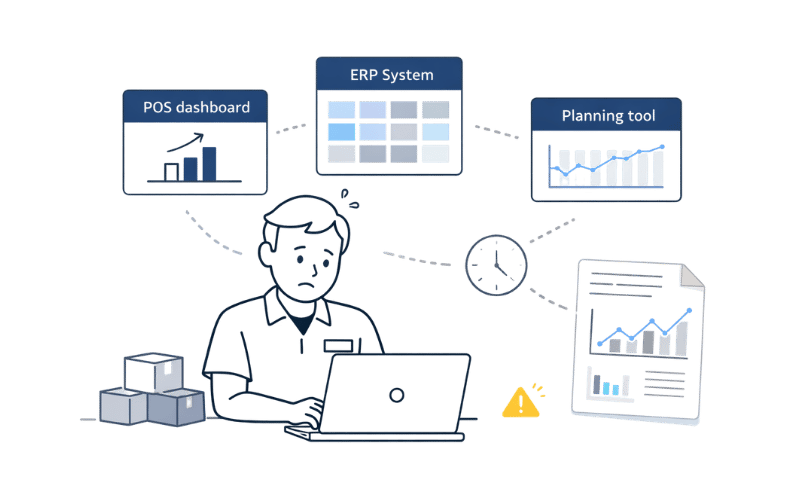
Slow‑moving inventory rarely appears as a clear problem in the early stages. Most products continue to sell at a low but steady rate, which prevents traditional alerts from triggering.
Retail teams struggle because:
By the time slow‑moving inventory is visible in reports, response options are limited.
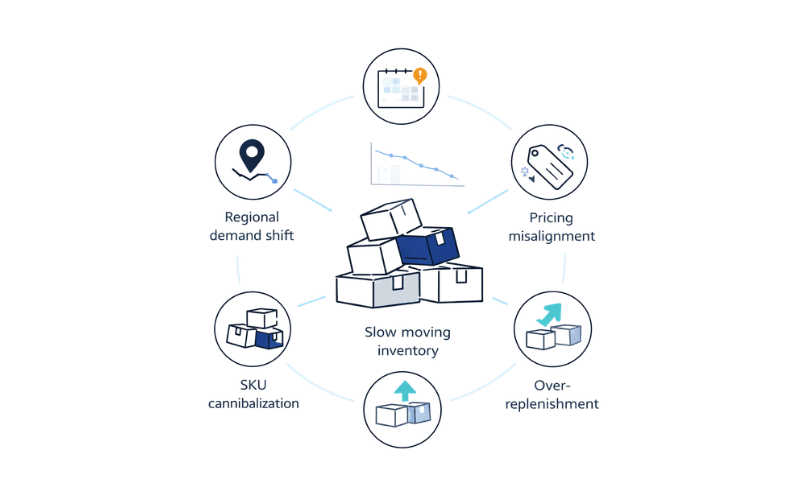
Slow‑moving inventory is usually caused by small demand mismatches that compound gradually.
Common causes include:
These signals appear early but are difficult to connect without continuous analysis.
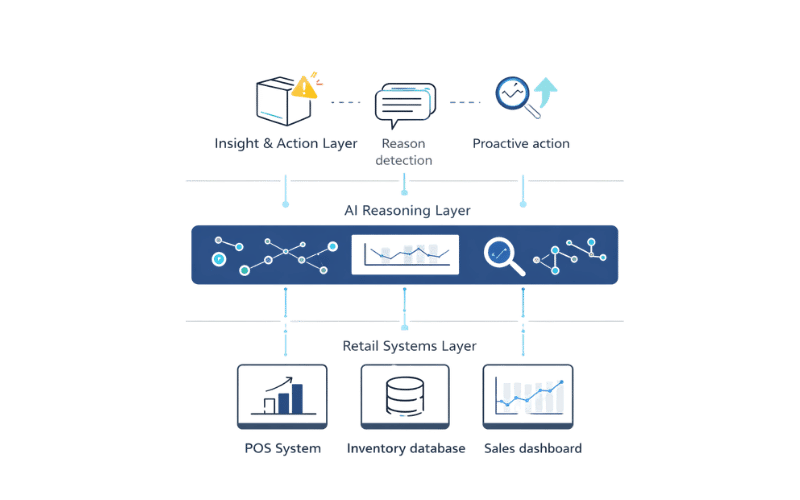
AI agents operate as a reasoning layer on top of retail systems. Instead of waiting for reports, they continuously observe inventory behavior as it evolves.
AI agents help by:
This enables retail teams to move from reactive cleanup to proactive intervention.
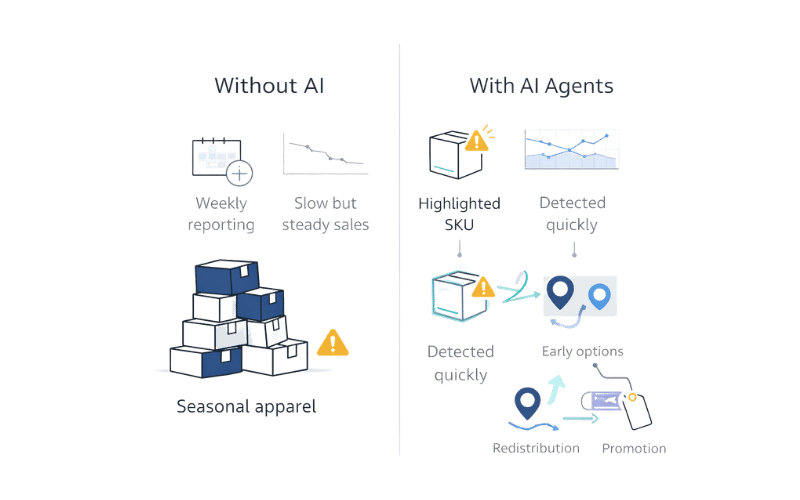
A retail operations team manages seasonal apparel across multiple regions.
Without AI agents:
With AI agents:
The team intervenes while corrective options are still available.
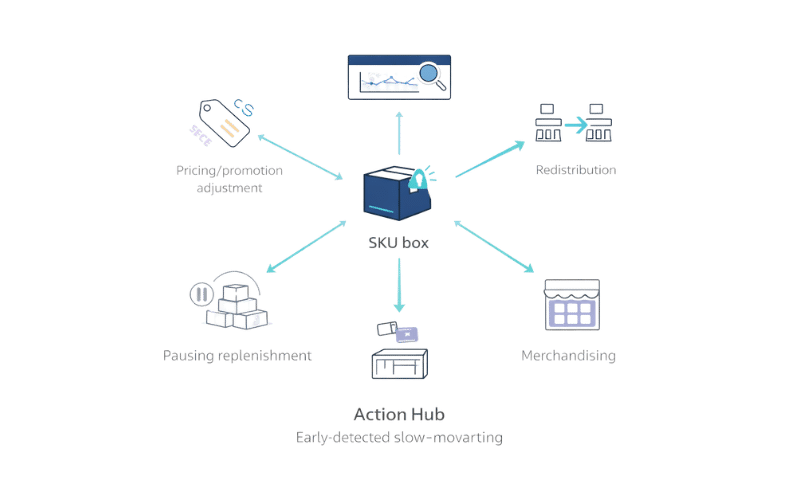
Once slow‑moving inventory is identified early, teams can take precise, low‑risk actions.
Common actions include:
Because AI agents provide reasoning and context, teams can act with confidence instead of guesswork.
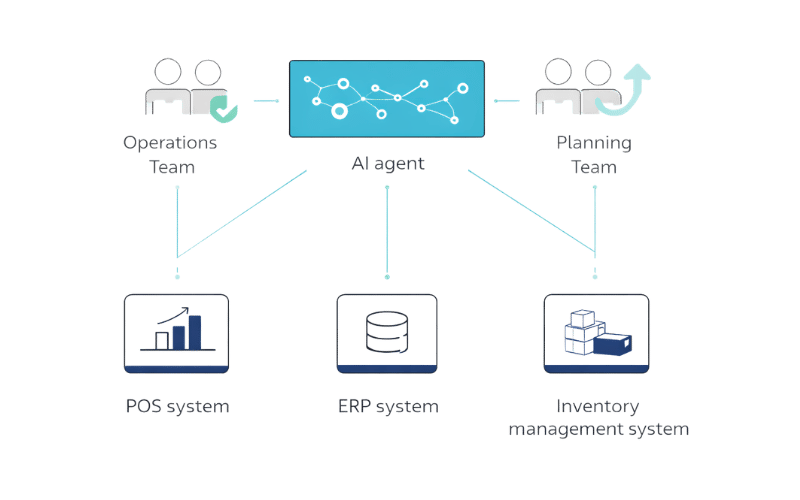
AI agents do not replace inventory management or planning platforms. They work on top of existing tools.
They:
This makes adoption practical without system changes or disruption.
Slow‑moving inventory becomes expensive when it is discovered too late. Retail teams often recognize the problem only after weeks of declining sales and excess stock accumulation. AI agents help teams identify slow‑moving inventory early by continuously monitoring sales velocity, comparing performance across locations and time periods, and highlighting risk signals before they appear in standard reports. This allows merchandising, planning, and operations teams to act sooner with targeted adjustments instead of reactive clearance decisions.
By detecting issues early and explaining why products are slowing down, AI agents enable retail teams to reduce excess inventory, protect margins, and maintain healthier stock flow across channels.