
This page explains the difference between AI agents and chatbots in a business operations context, how each works, and when one is more appropriate than the other.
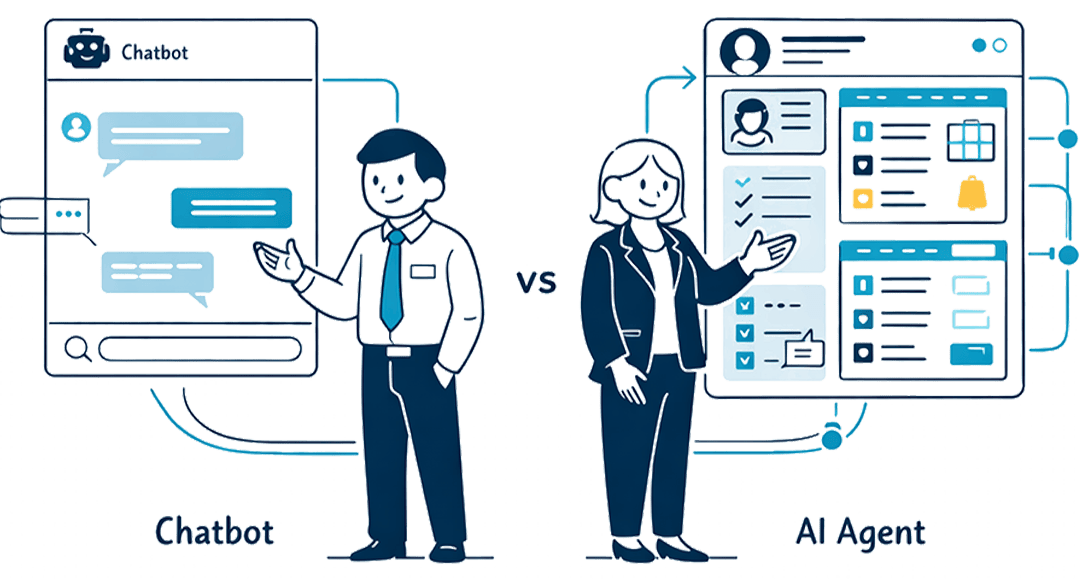
Chatbots are designed to respond to predefined questions and conversations. AI agents are designed to retrieve live data, understand operational context, and take actions across business systems.
For operational work, AI agents go beyond conversation by supporting decisions and workflows, not just responses.
Many organizations use the terms AI agents and chatbots interchangeably. This creates confusion during implementation and leads to tools that fall short of operational needs.
Business teams often expect chatbots to:
Chatbots are not built for this. AI agents are.
Understanding the difference helps teams choose the right approach and avoid stalled automation projects.
A chatbot is a conversational system designed to respond to user input using predefined rules or trained language models. It primarily focuses on dialogue, not action.
In business operations, chatbots typically:
Chatbots work well when questions are predictable and answers do not require live system access.

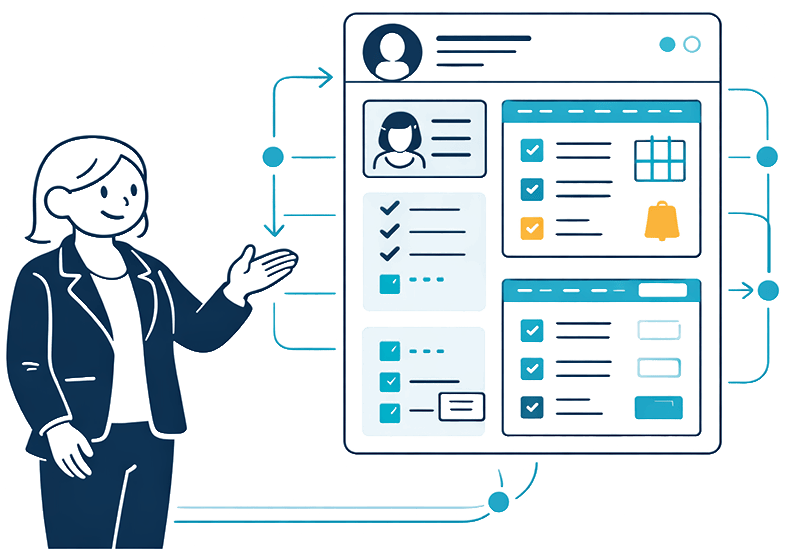
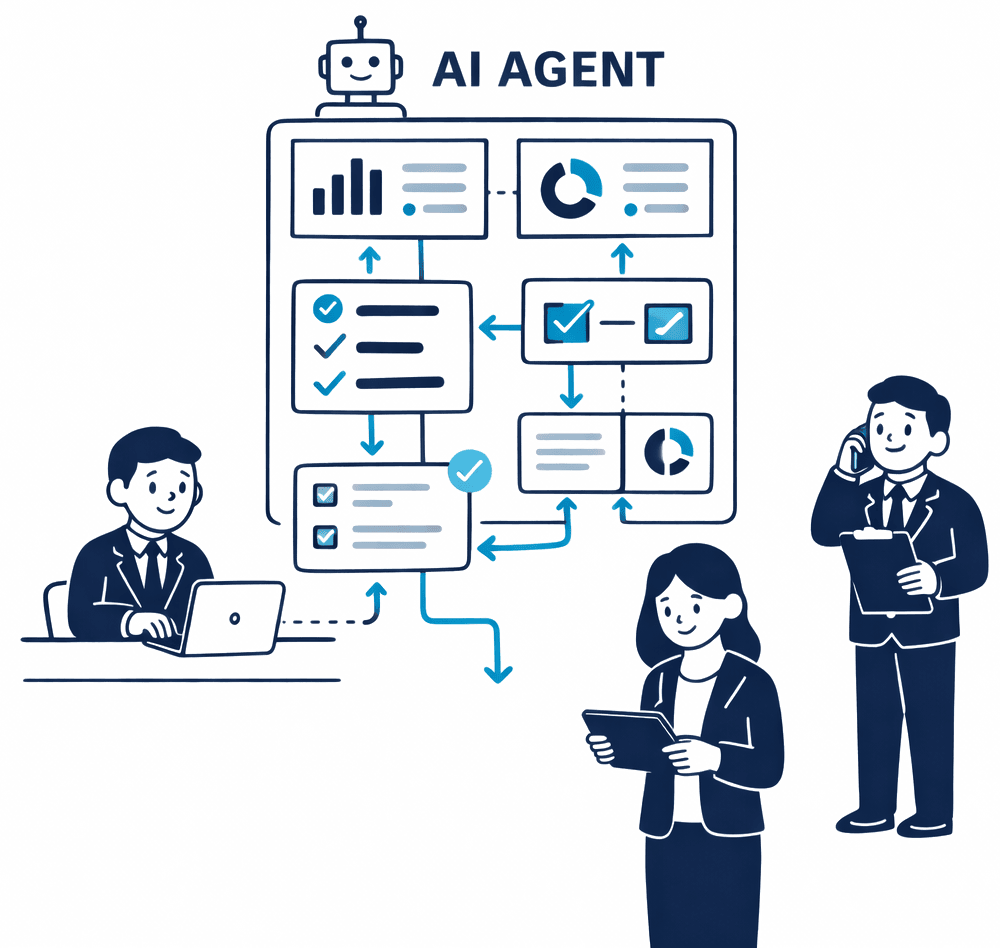
An AI agent is a software system that retrieves information, understands business context, and performs actions across connected systems using live, permission controlled data.
In business operations, AI agents are used to:
Instead of responding with text only, AI agents act on information.
Logicon designs and implements AI agents that connect directly to business systems, apply access rules, and support real operational workflows.
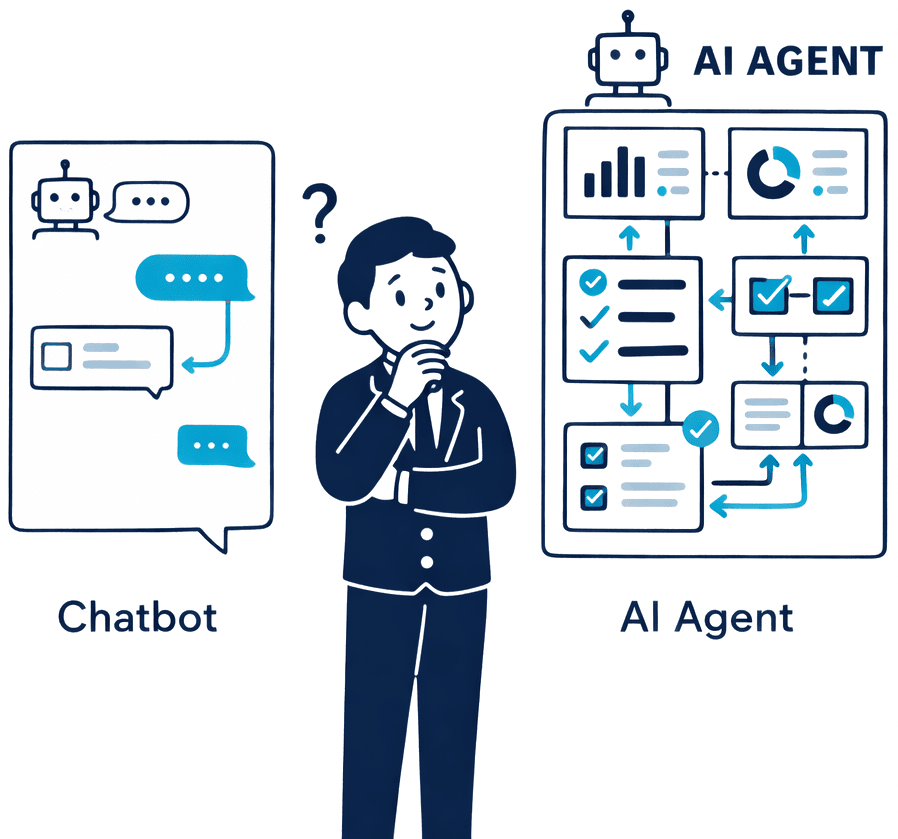
Chatbots are primarily conversational interfaces. They respond to user inputs using scripted flows or trained responses and are best suited for handling predictable questions.
AI agents are operational systems. They retrieve live data, understand business context, and take actions across connected tools such as CRMs, internal systems, and workflow platforms.
Conversational interface
Primarily text based responses
Limited system access
No workflow execution
Simple, repetitive queries
Operational system
Context aware responses
Live system integrations
Ability to trigger actions
Operational complexity
Questions → Completed work
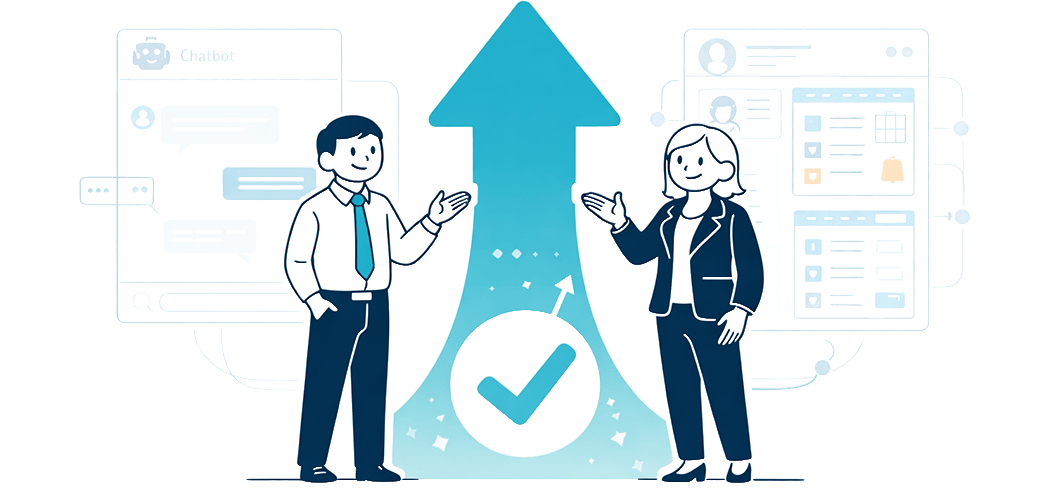
In practice, chatbots answer questions and AI agents help teams complete work.
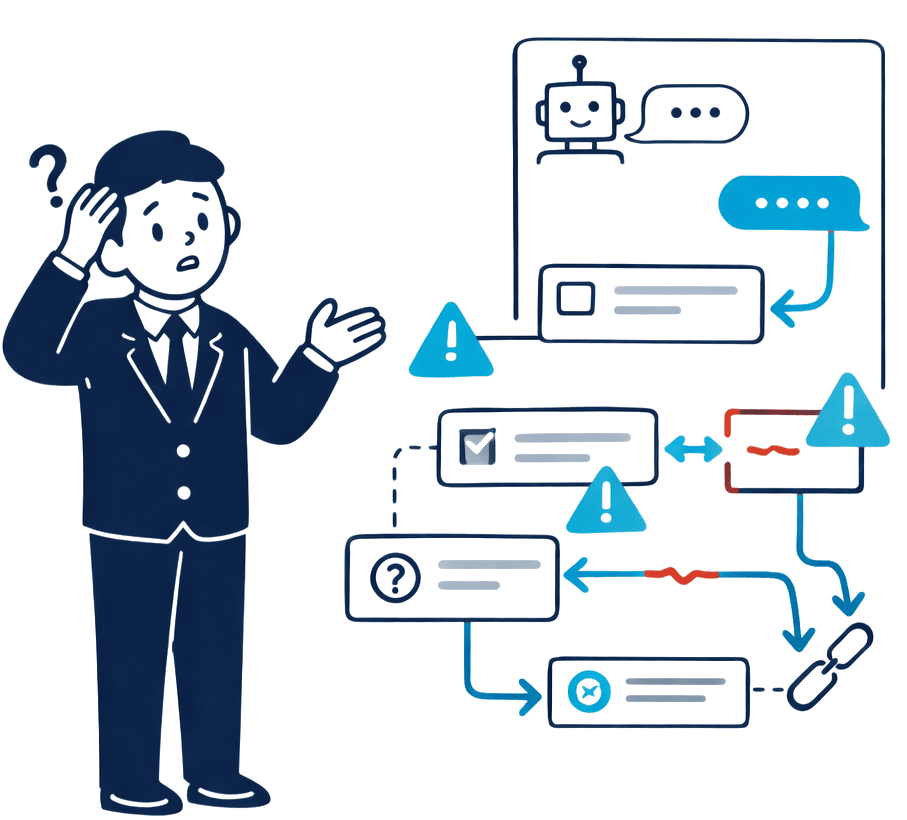
Chatbots struggle when business operations require:
In these scenarios, chatbots can only describe information. They cannot retrieve, verify, or act on it reliably.
AI agents help operational teams by:
An operations manager can ask whether a task is complete, who owns the next step, and what system needs updating. The AI agent retrieves the answer and triggers the next action if needed.
No. They serve different purposes.
Chatbots are useful for:
AI agents are better suited for:
In many organizations, chatbots and AI agents coexist, with agents handling operational work behind the scenes.
Chatbots are effective when the goal is basic information delivery or simple routing.AI agents are required when teams need accurate answers from live systems, coordinated actions, or support for ongoing operational workflows. This helps teams choose the right tool instead of over-engineering or under-solving the problem.
Logicon works with business teams to assess where chatbots stop being effective and where AI agents can add real operational value by integrating systems, defining access rules, and supporting workflows that teams rely on every day.
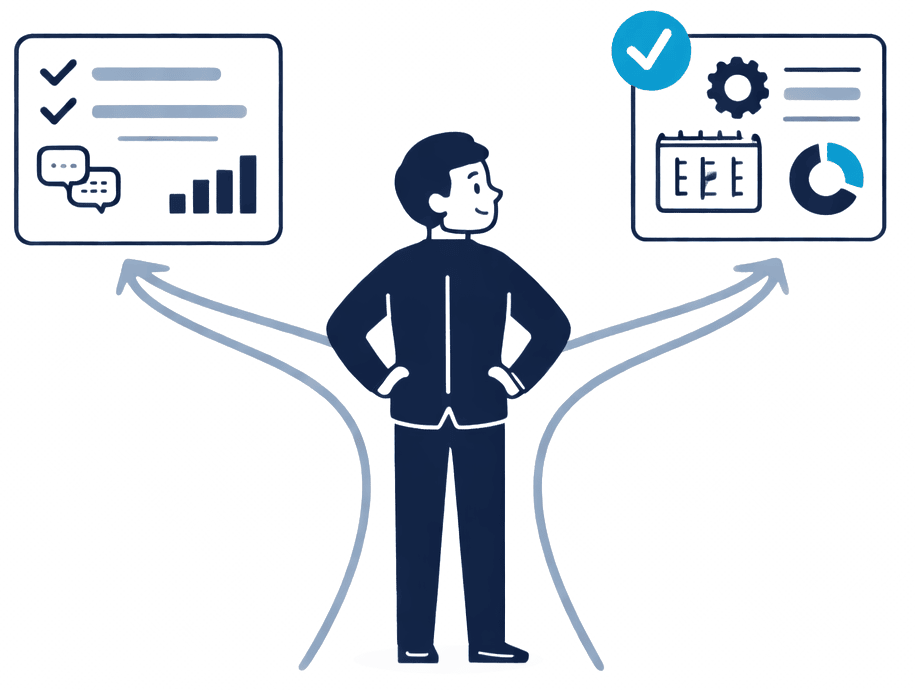
If your teams need answers, coordination, and action across systems, the difference matters.
The question is not which technology sounds better. The question is which one actually supports how your business runs today.