How AI Agents Help Retail Teams Detect Demand Shifts Before Sales Drop

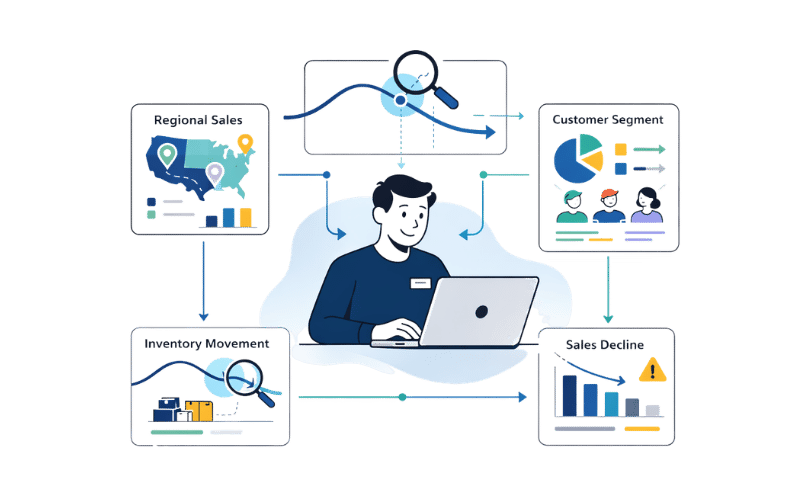
Retail demand rarely drops all at once. It shifts gradually across regions, channels, and customer segments before showing up in top‑line sales reports. Most retail teams miss these early signals because demand data is fragmented and reviewed too late.

AI agents help retail teams detect demand shifts early by continuously analyzing sales patterns, customer behavior, and inventory movement across systems and highlighting meaningful changes before revenue declines.
How AI Agents Help Retail Teams Detect Demand Shifts Before Sales Drop
Why Retail Teams Miss Early Demand Shifts

Why Retail Teams Miss Early Demand Shifts

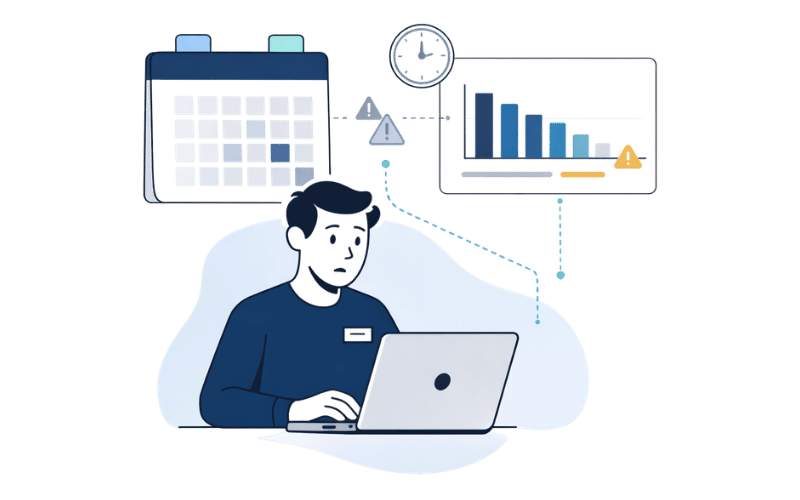
Retail teams often rely on weekly or monthly reports to understand demand. By the time a decline appears in those reports, the opportunity to respond early has already passed.

Common causes include:

  • Demand data spread across POS, ecommerce, and inventory systems
  • Aggregate metrics that hide SKU‑level or location‑level changes
  • Manual analysis that focuses on historical performance
  • Alerts triggered only after thresholds are crossed

As a result, teams react after sales drop instead of adjusting before impact.

What Detecting Demand Shifts Early Actually Means

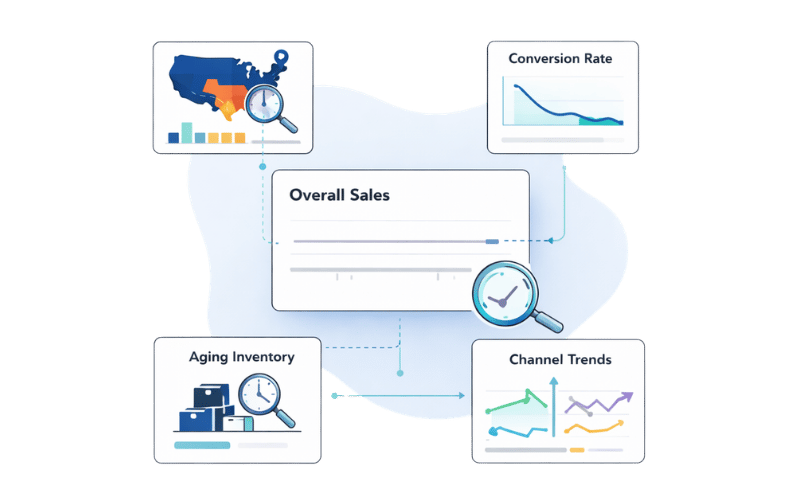
Detecting a demand shift does not mean forecasting far into the future. It means identifying small but consistent changes that indicate customer behavior is changing.

Examples include:

  • A product selling slower in specific regions while overall sales look stable
  • Declining conversion rates for certain categories despite steady traffic
  • Inventory aging faster in some stores than others
  • Channel performance diverging without a clear explanation

These signals exist in the data, but they are difficult to surface manually.
What Detecting Demand Shifts Early Actually Means
How AI Agents Detect Demand Shifts Before Sales Drop

How AI Agents Detect Demand Shifts Before Sales Drop

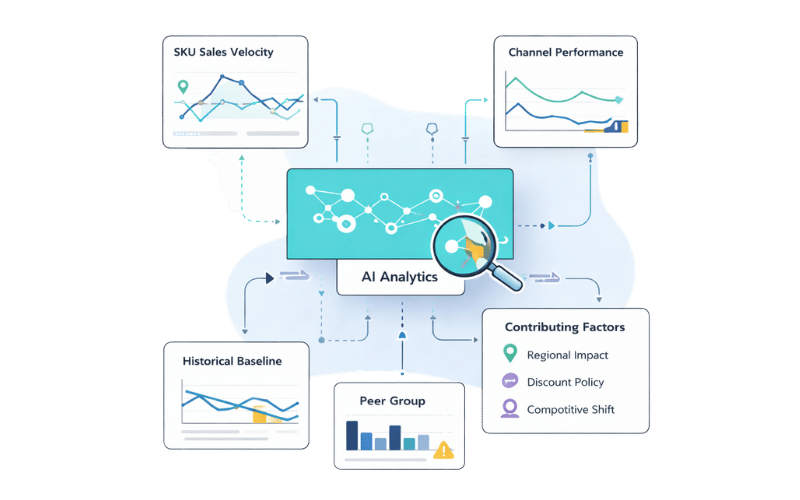
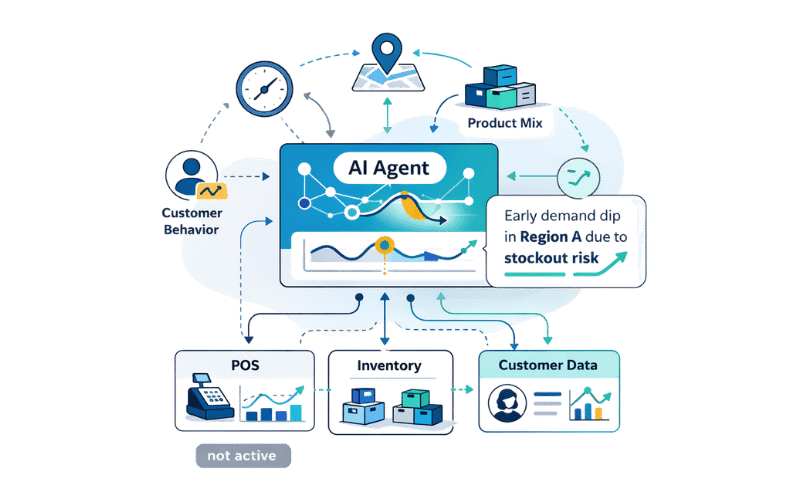
AI agents continuously monitor demand signals across systems instead of relying on periodic reports.

They do this by:

  • Tracking SKU‑level sales velocity by location and channel
  • Comparing current performance against historical patterns and peer groups
  • Identifying deviations that are statistically meaningful, not just noisy changes
  • Explaining which factors are contributing to the shift

Instead of flagging everything, AI agents focus attention on changes that are likely to affect future sales.

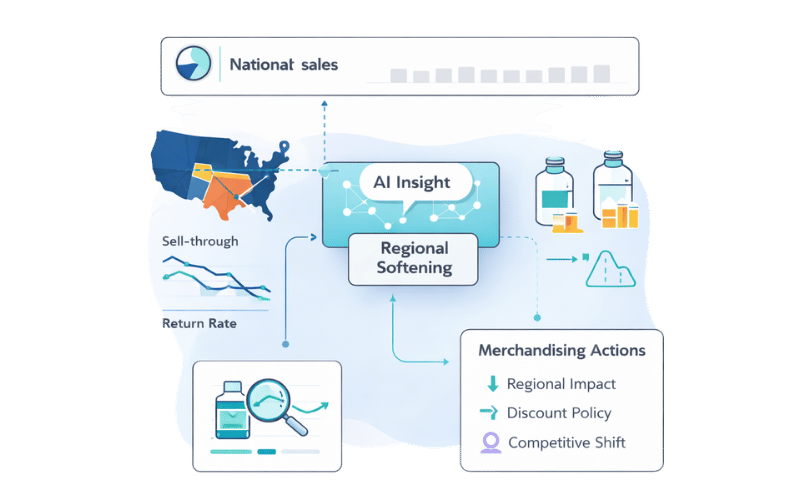
Detecting a Regional Demand Shift

For example, a retail team sees stable national sales for a seasonal apparel category. No alerts are triggered in their dashboards.

An AI agent detects that:

  • Sell‑through has slowed in a specific region over the past ten days
  • Return rates for the category are increasing in that region
  • Similar products are showing the same pattern

The agent surfaces this insight with an explanation that demand is softening regionally, not nationally. The merchandising team adjusts allocation and promotions in that region before the slowdown spreads, preventing excess inventory and margin loss.
AI agents identifying root causes of order issues
Consistent customer communication using AI agents

How This Changes Retail Decision Making

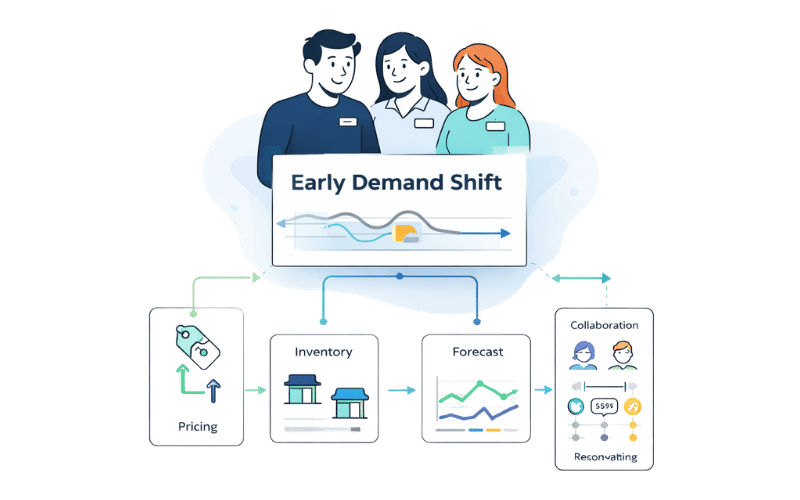
Early demand detection allows teams to act while options are still available.

With AI agents, retail teams can:

  • Adjust pricing or promotions before sales decline
  • Rebalance inventory across locations
  • Update forecasts based on real demand signals
  • Align merchandising, planning, and operations on the same insight

Decisions become proactive instead of reactive.

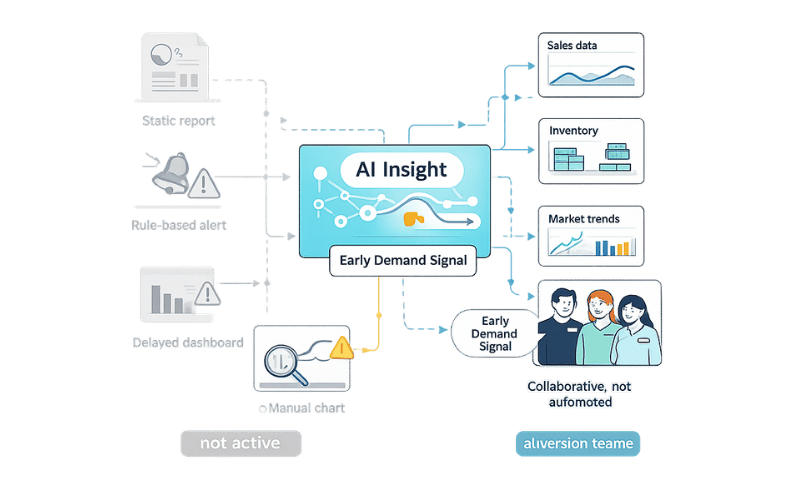
What This Is Not

This is not static reporting, rule‑based alerts, or traditional demand forecasting. It does not rely on fixed thresholds, delayed dashboards, or manual interpretation of charts after sales decline. AI agents do not replace merchandising or planning teams, and they do not make autonomous decisions. Instead, they proactively surface and explain early demand signals across systems so teams can act before revenue, inventory, or margins are impacted.
What AI agents do not replace in customer support
Why AI Agents Are Better Suited for Demand Shift Detection

Why AI Agents Are Better Suited for Demand Shift Detection

Demand shifts are contextual. They depend on time, location, product mix, and customer behavior.

AI agents are effective because they:

  • Work across systems instead of within a single dashboard
  • Continuously update their understanding as new data arrives
  • Focus on explaining why demand is changing, not just that it changed
  • Surface insights in natural language that teams can act on immediately

This makes them well suited for fast‑moving retail environments.

FAQs

How do AI agents detect demand shifts before sales drop?
AI agents continuously monitor sell‑through, inventory velocity, promotions, and external signals across systems. They identify statistically meaningful changes in demand patterns and explain what is shifting, where, and why, before those changes appear in lagging sales reports.
They use data from POS systems, ecommerce platforms, inventory systems, and historical sales patterns to compare current performance against expected behavior.
No. Demand shift detection focuses on identifying early changes happening now, while forecasting predicts future demand based on models and assumptions.
Yes. AI agents operate at granular levels, allowing teams to see shifts by SKU, store, region, or channel instead of relying on aggregate metrics.
Because AI agents surface changes as they emerge, teams can respond days or weeks earlier than they would using traditional reporting.

Final takeaway

Retail demand rarely disappears overnight. It changes quietly before sales drop, margins erode, or inventory builds up. AI agents help retail teams detect these demand shifts early by continuously analyzing real‑time signals across systems and explaining where and why behavior is changing. This enables teams to respond sooner, make more informed decisions, and protect revenue before problems become visible in standard reports.