
Fintech operations teams handle a constant stream of questions related to transactions, compliance status, audits, and customer inquiries. These questions often require pulling information from multiple systems under strict regulatory constraints. While the data exists, answering accurately and quickly is difficult when records are fragmented across payment platforms, ledgers, compliance tools, and internal documentation. AI agents help fintech operations teams answer compliance and transaction questions faster by retrieving approved information across systems and presenting it in a clear, auditable format.
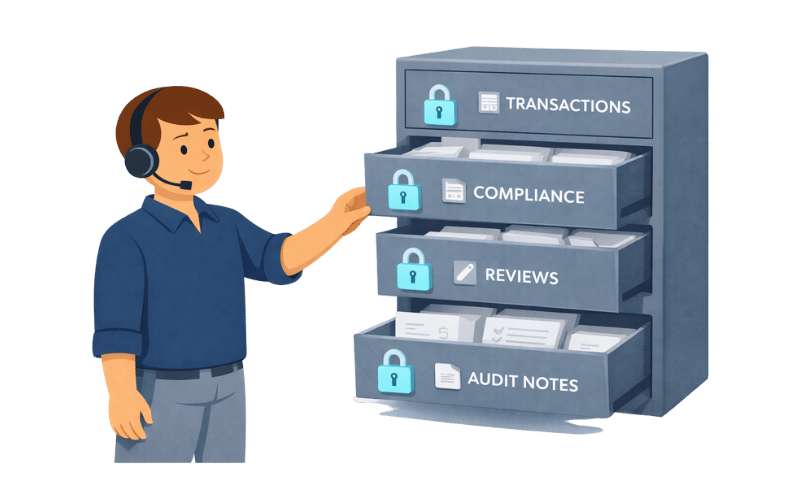
Compliance and transaction questions take time because the information required to answer them is distributed across multiple regulated systems. A single inquiry often involves transaction logs, reconciliation records, compliance rules, and historical review actions.
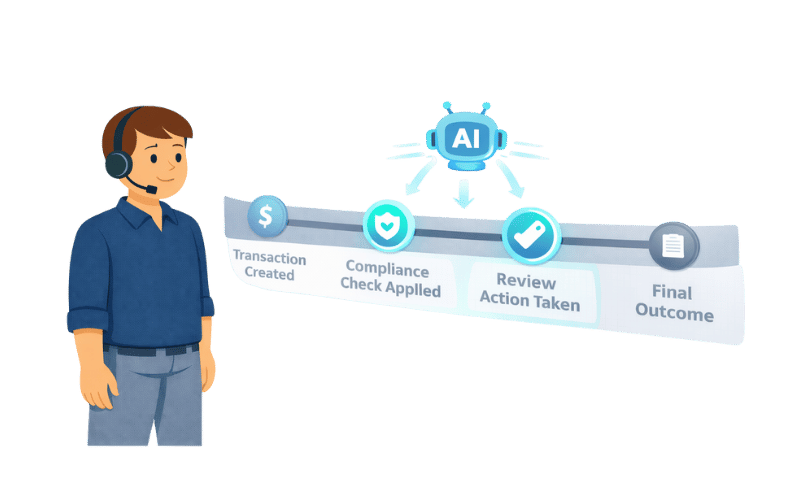
For example, when an internal team asks why a transaction was blocked, operations may need to confirm the transaction path, the specific compliance rule triggered, whether the flag was reviewed, and what follow‑up action was taken. Each step is typically recorded in a different system, making even routine questions time‑consuming to resolve.
Fintech operations teams frequently encounter:
These challenges slow internal workflows and increase the risk of inconsistent or incomplete responses.
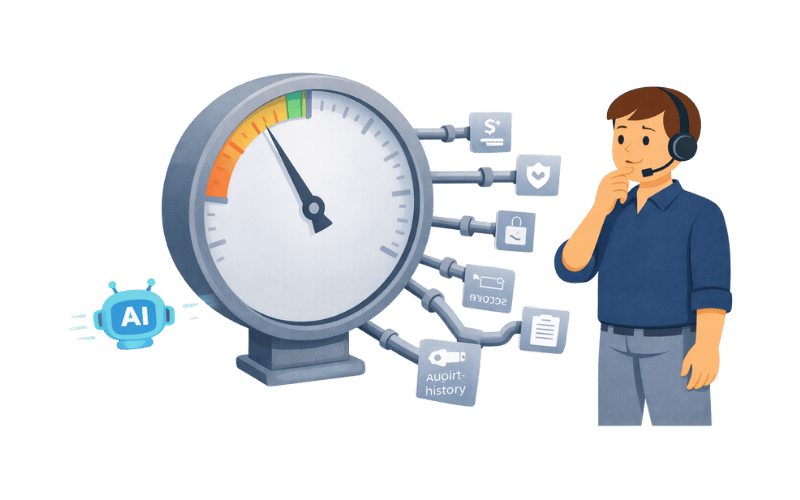
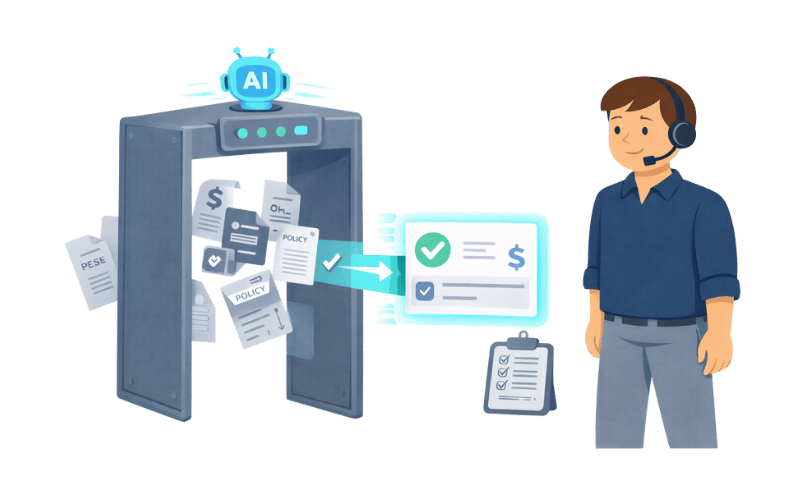
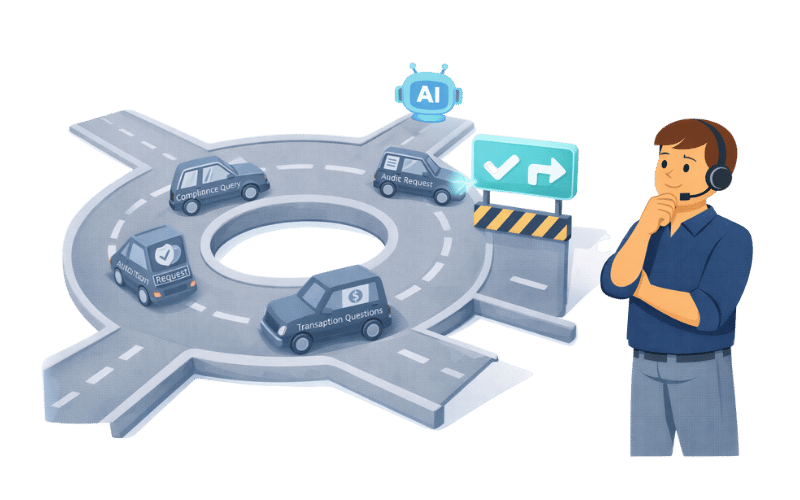
AI agents act as an intelligent layer between fintech systems and operations teams. They retrieve relevant transaction and compliance context in real time while respecting access controls and regulatory boundaries.
In practice, AI agents can:
This reduces manual investigation and speeds up decision‑making.
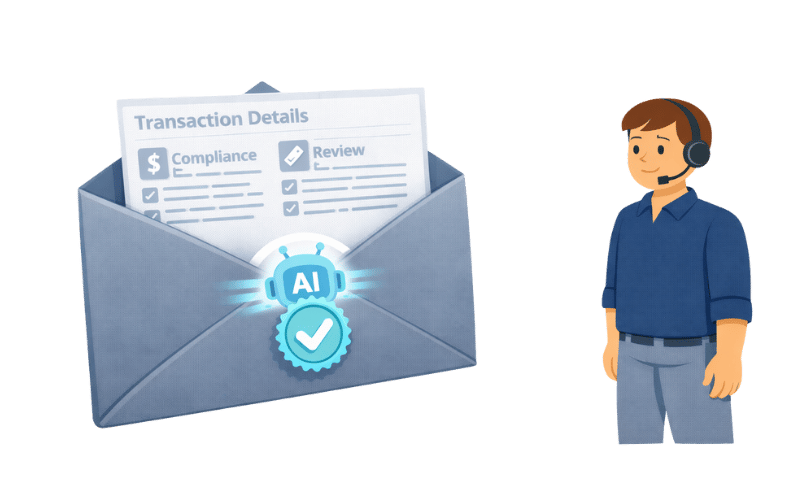
With AI agents supporting operations, teams no longer assemble answers manually. When a question is raised, the agent provides a consolidated view of the transaction and its compliance context.
For example:
Answers are consistent, traceable, and easier to verify.
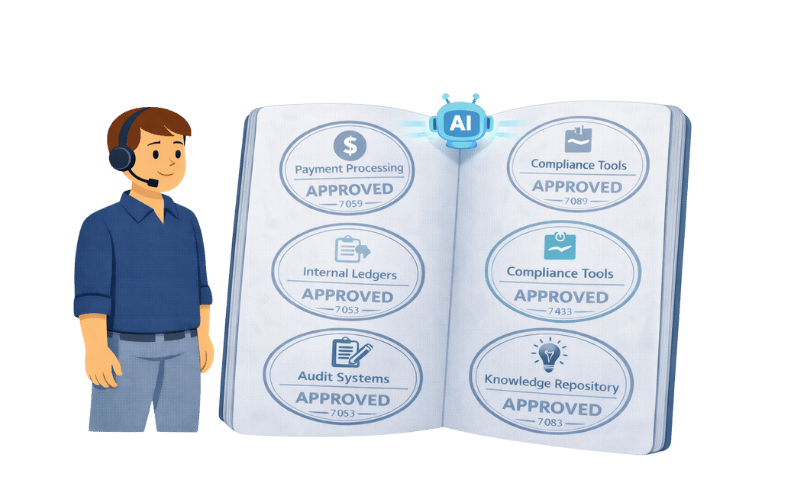
AI agents integrate with existing fintech infrastructure rather than replacing it. Typical integrations include:
All access is permission‑based and logged to support compliance and oversight requirements.
Fintech teams usually explore AI agents when answering questions becomes a bottleneck. Common signals include:
When accuracy and speed depend on manual investigation, AI agents provide a more reliable solution.
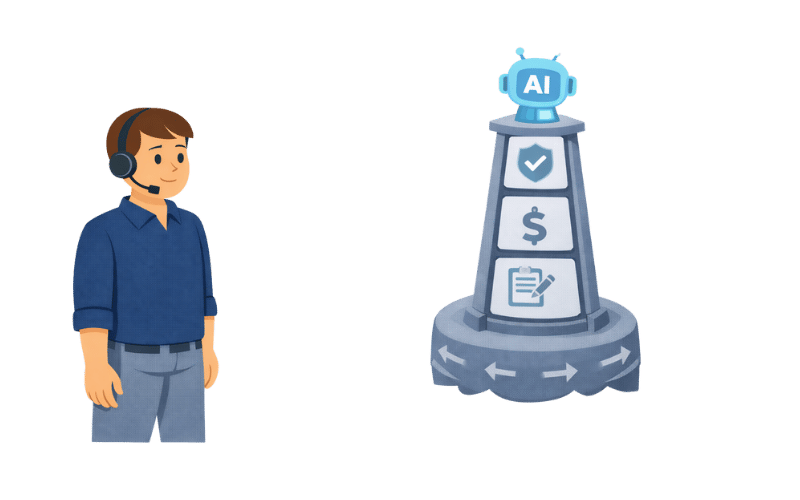
AI agents can be introduced without disrupting existing compliance or transaction systems. They support operations teams by ensuring accurate information is accessible when questions arise.
Logicon designs and implements AI agents that connect fintech systems, respect regulatory constraints, and align with operational workflows. The focus is on clarity, auditability, and faster resolution rather than automation for its own sake.
Information can be surfaced immediately, reducing investigation time from hours to seconds.
Fintech operations teams struggle to answer compliance and transaction questions quickly when information is fragmented across systems. Even routine inquiries become time‑consuming when teams must manually reconstruct what happened and why. AI agents help by consolidating transaction and compliance context into a single, reliable view that teams can trust. This improves response speed, consistency, and audit readiness without changing the systems fintech organizations already depend on.