
Healthtech teams operate in environments where information must be accessible, accurate, and tightly controlled at the same time. Operational questions often require data from multiple systems, yet not every team member should see the same details. As organizations scale, accessing patient‑safe information becomes less about data availability and more about governance, context, and trust. This is where AI agents are increasingly used to support secure information access across systems.
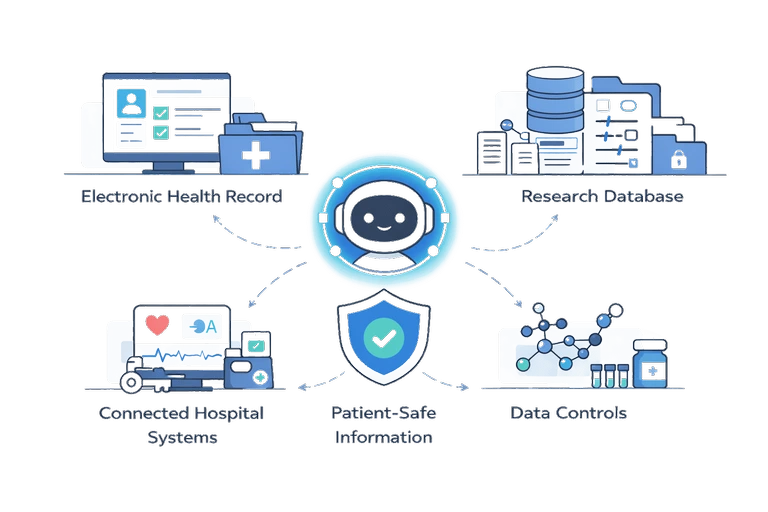
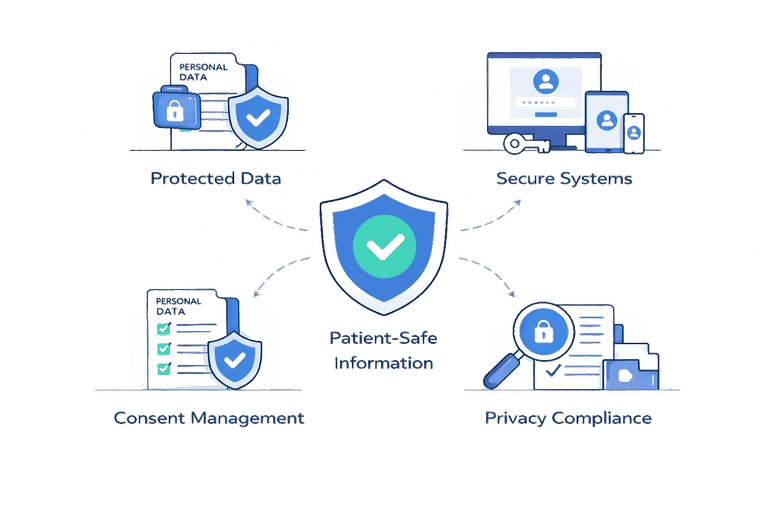
Patient‑safe information refers to operational data that can be accessed, shared, and acted on without exposing protected health information or violating access controls. Healthtech teams rely on this information to coordinate work across systems while staying compliant.
In day‑to‑day operations, this often includes:
This information is critical for decision‑making, but it is usually spread across EHRs, billing platforms, scheduling tools, and internal systems. When teams cannot quickly verify status without opening multiple tools or requesting access, delays and errors increase even when no clinical data is involved.
AI agents help healthtech teams retrieve this approved, non‑clinical context safely, ensuring decisions can be made without expanding access to sensitive patient records.
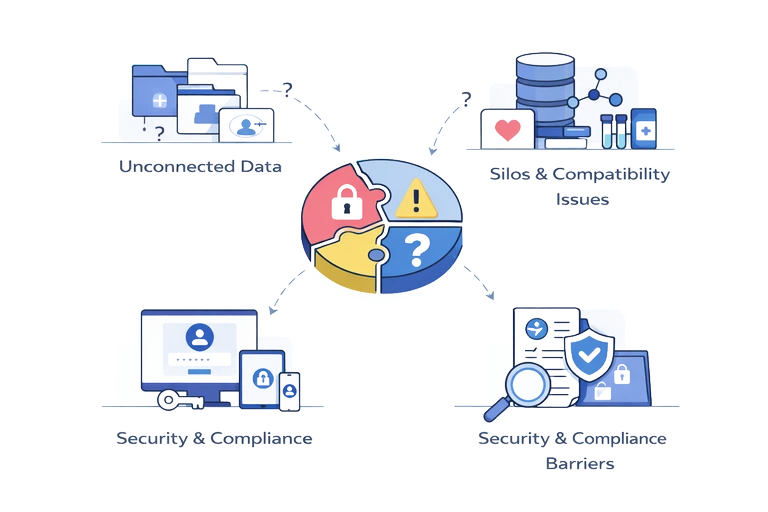
Healthtech data lives across EHRs, scheduling tools, intake systems, billing platforms, and internal support tools. Each system has its own access rules and update cycles.
Teams commonly struggle with:
The challenge is not lack of data, but safely connecting it.
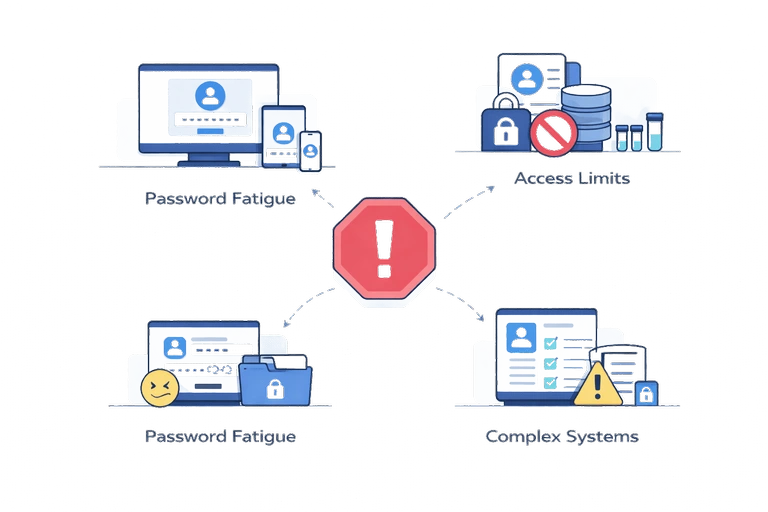
Most teams rely on role‑based dashboards, reports, or manual checks to access information. These methods work in isolation but break down when questions require context from more than one system.
Traditional approaches struggle when:
As a result, teams either move too slowly or take on unnecessary risk.
AI agents act as an access layer rather than a data store. They retrieve information from approved systems, evaluate permissions, and return only what the requester is allowed to see.
In practice, AI agents:
This allows teams to get answers without expanding access broadly.
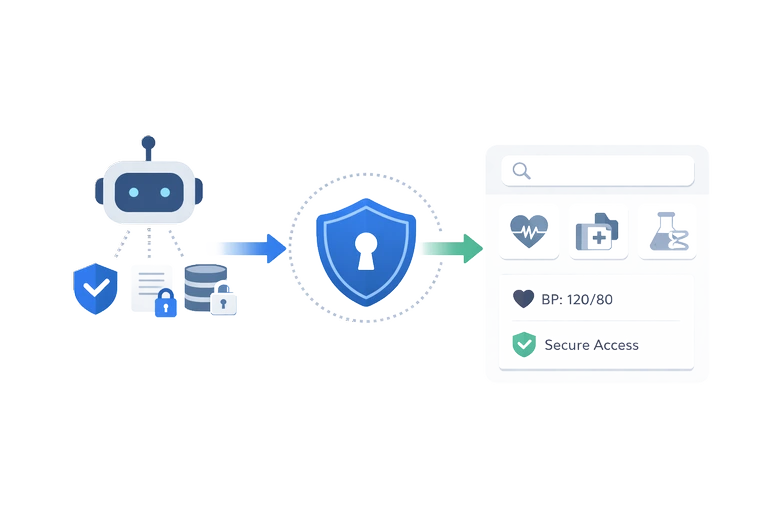

Operational outcomes AI agents enable across healthtech systems
AI agents support healthtech teams by improving how information flows across systems, without changing existing infrastructure or access rules.
AI agents surface up‑to‑date operational status from connected systems so support, operations, and administrative teams can act without waiting on manual confirmation.
By enforcing permission‑based retrieval, AI agents ensure teams only see patient‑safe data relevant to their role, reducing accidental exposure and access escalation.
AI agents retrieve approved data with traceability intact, allowing teams to answer internal and external questions without recreating reports or exporting sensitive information.
Instead of navigating multiple tools, teams receive accurate answers from connected systems in one place, improving speed and consistency across workflows.
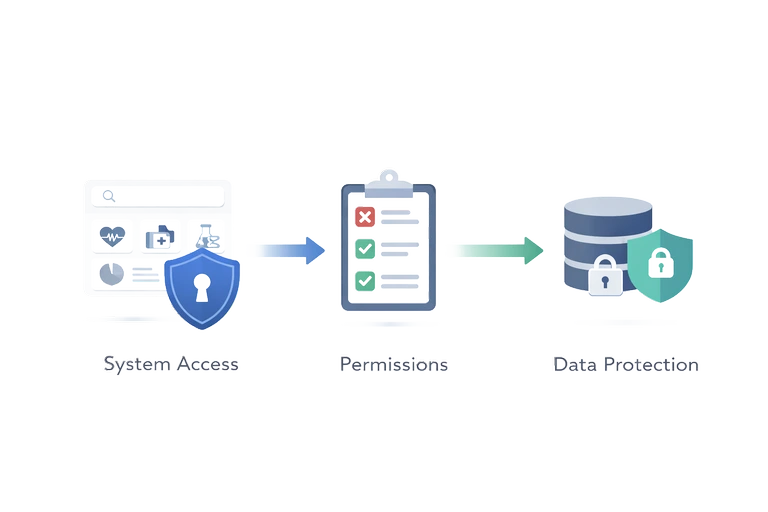
AI agents operate entirely within existing governance frameworks. They do not bypass security controls or replicate data.
Typical integrations include:
All access is permission‑based, logged, and aligned with healthcare data protection requirements.
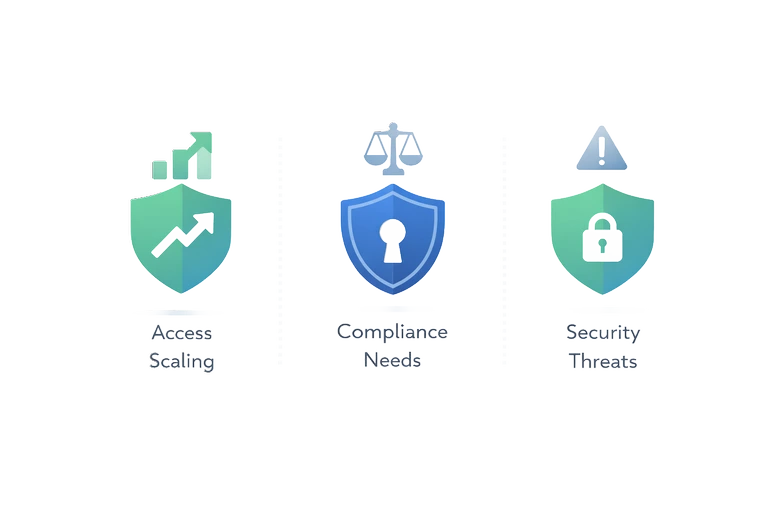
Teams usually explore AI agents when information access becomes a bottleneck.
Common signals include:
These signals indicate a need for safer, more scalable access.
No. AI agents retrieve data in real time from existing systems without duplicating records.
Accessing information safely is one of the hardest operational challenges in healthtech. As systems multiply and regulations tighten, giving teams the answers they need without increasing risk becomes critical. AI agents provide a controlled way to access patient‑safe information across systems by applying context, permissions, and auditability at every step. For healthtech teams balancing speed with responsibility, AI agents offer a practical path to operational clarity without compromising trust or compliance.