
Retail operations teams answer inventory questions every day, but the answers are rarely straightforward. Stock levels, availability, and movement data often live across multiple systems and update at different times. AI agents help retail operations teams answer inventory questions by connecting data across systems, preserving context, and delivering clear, reliable answers when decisions need to be made.


Inventory questions rarely fail because data is missing. They fail because the data is fragmented and inconsistent.
Operations teams must account for warehouse stock, store inventory, in‑transit items, returns, and pending transfers. Each source may tell a different version of the truth at any given moment.
Common challenges include:
As a result, teams spend time reconciling data instead of acting on it.
The breakdown happens between data capture and operational use. Most systems store inventory as static records, while operations teams need situational answers.
Typical points of failure include:
When answers depend on cross‑checking systems, response speed and confidence suffer.

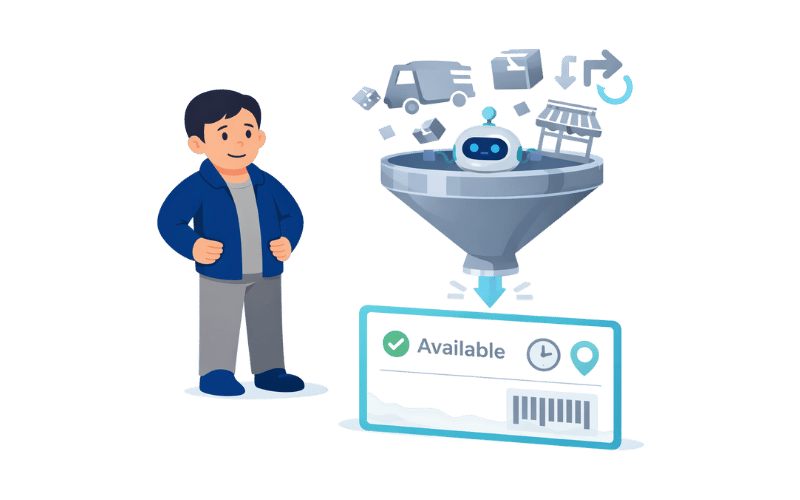
AI agents help by sitting between inventory systems and operations workflows. They retrieve, align, and interpret inventory data before presenting an answer.
In practice, AI agents can:
This allows teams to ask operational questions and receive usable responses.
With AI agents in place, inventory questions are answered using reconciled, contextual data rather than single‑system snapshots.
For example, when a store manager asks whether a SKU can be fulfilled today, the AI agent checks store stock, in‑transit transfers, recent returns, and nearby locations. If on‑hand stock is low but a transfer is arriving later that day, the answer reflects that timing instead of reporting an out‑of‑stock status.
In practice:
Teams receive answers they can act on without manual verification.
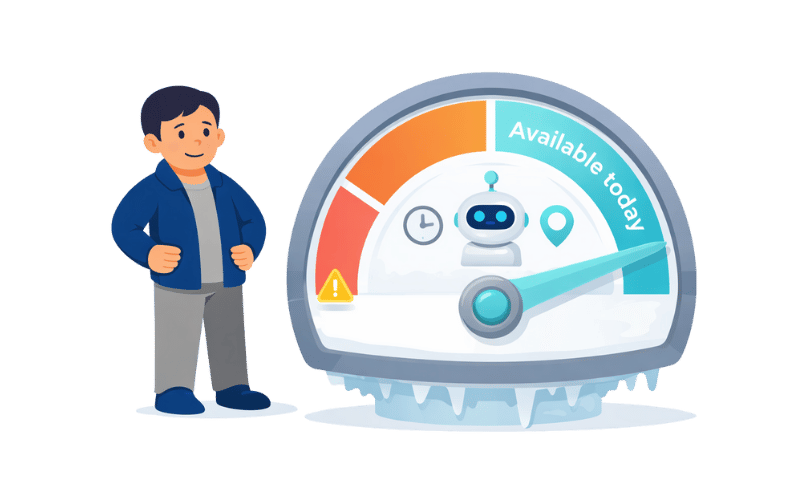
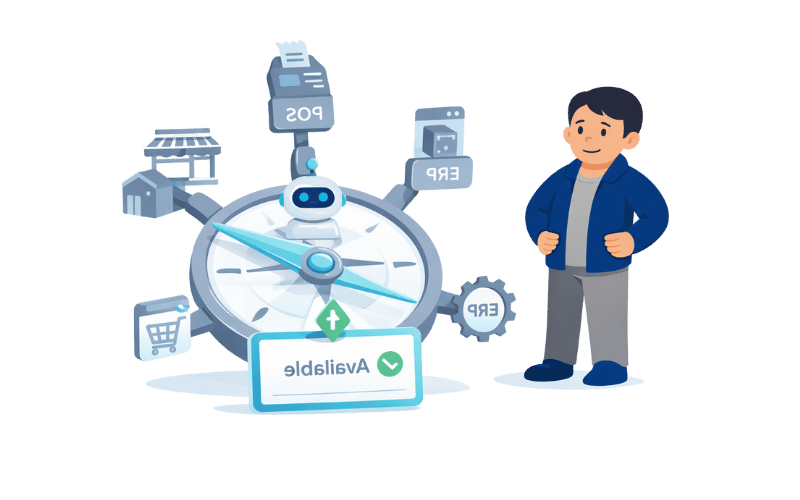
AI agents work alongside existing retail systems to ensure inventory answers are consistent and traceable.
Typical integrations include:
Each response is derived from authorized sources and reflects the most relevant operational context available.
Retail operations teams typically explore AI agents when inventory questions slow down execution.
Common signals include:
When confidence in inventory data drops, AI agents offer a more reliable approach.

AI agents can be introduced without changing existing inventory systems. They support operations, store teams, and customer support by delivering accurate answers based on connected data.
Logicon designs and implements AI agents that integrate retail inventory systems, define answer logic, and ensure operational reliability. The focus is on accuracy and usability rather than automation for its own sake.
Inventory questions become difficult when data is fragmented across retail systems and updates at different times. Operations slow down when teams must reconcile numbers before acting. AI agents help retail operations teams answer inventory questions by aligning data across systems, adding operational context, and delivering clear, reliable answers. This allows teams to move faster, reduce errors, and support better decisions without replacing the systems they already use.