
Accurate inventory forecasting at the SKU level determines whether retail teams meet demand or absorb avoidable losses. When forecasts are built on incomplete signals or delayed updates, teams face overstock, stockouts, and constant manual correction. AI agents help retail teams forecast inventory more precisely by connecting real‑time data across systems and translating it into actionable SKU‑level insights that operations teams can trust.
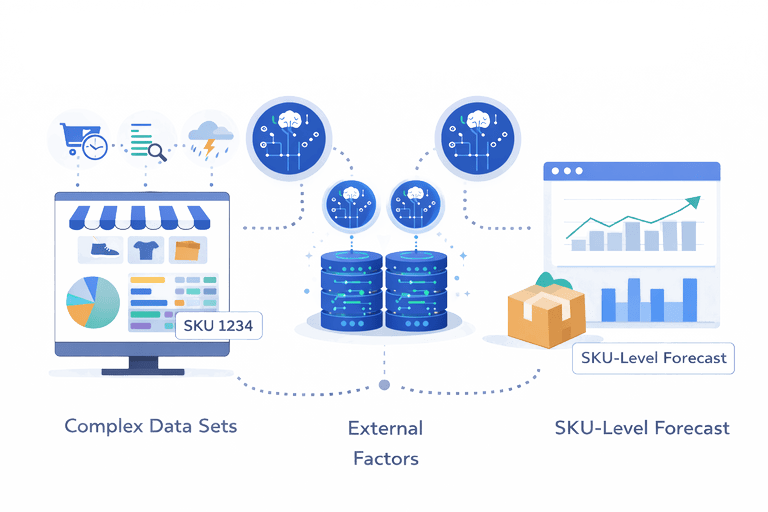
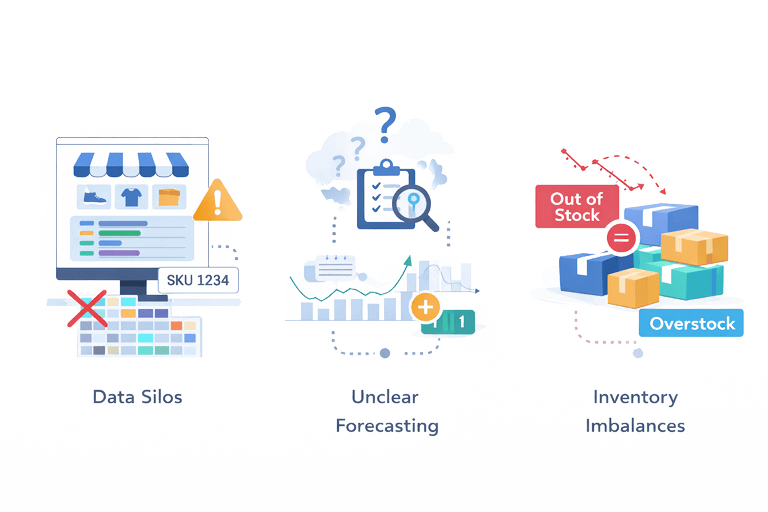
Retail inventory forecasting often fails not because teams lack data, but because SKU‑level signals are fragmented and difficult to reconcile. Demand patterns vary by location, channel, and time, yet forecasting processes frequently rely on static models or delayed reports.
For example, a single apparel SKU may sell through rapidly in two urban stores due to local foot traffic and promotions, while the same SKU remains overstocked online. Traditional systems record these signals separately, making it difficult to adjust forecasts in time.
Common challenges include:
As a result, inventory decisions are made with incomplete visibility, even when data technically exists.
SKU‑level forecasting breaks down when decisions depend on partial or outdated context. Even small gaps, such as delayed sales feeds or missing location data, can compound across hundreds or thousands of SKUs.
Common causes include:
Without a reliable way to align these inputs, forecasts become estimates rather than operational guidance.
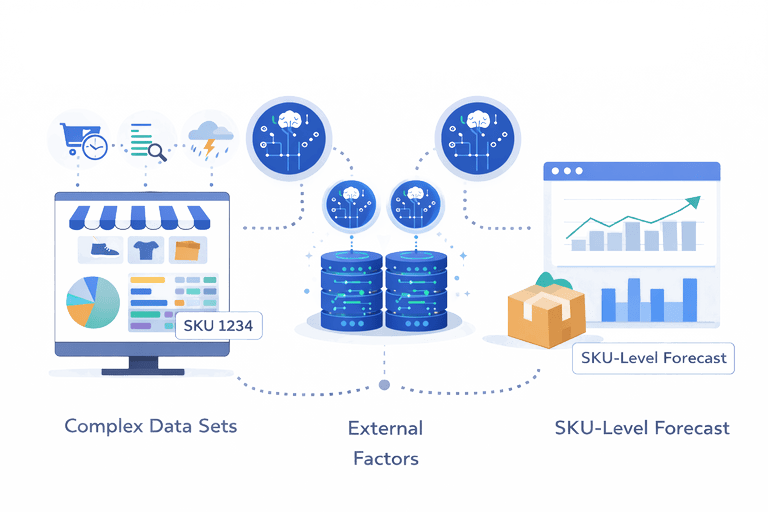
AI agents support SKU‑level forecasting by continuously retrieving and aligning data from approved retail systems. Instead of generating static predictions, they answer operational questions using live context.
In practice, AI agents can:
This allows teams to understand not just what the forecast says, but why it looks the way it does.
With AI agents in place, inventory teams move from reactive adjustments to proactive planning. Forecasts become explainable and easier to act on.
For example:
SKU‑level forecasting becomes consistent, auditable, and operationally useful.
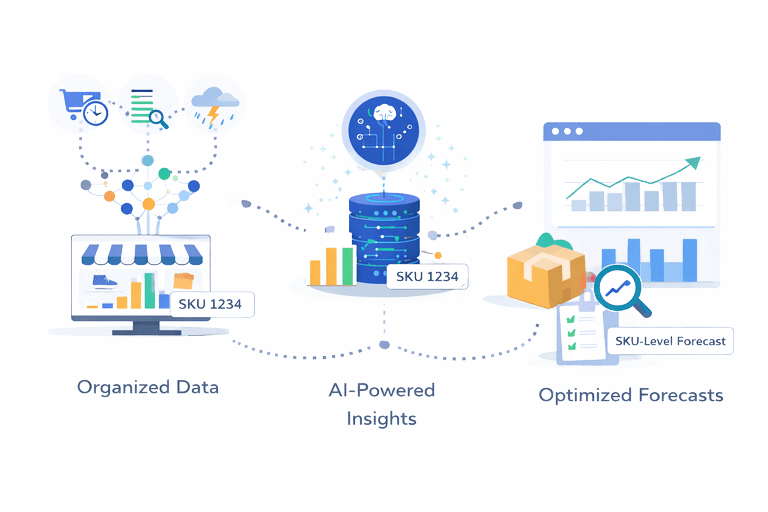
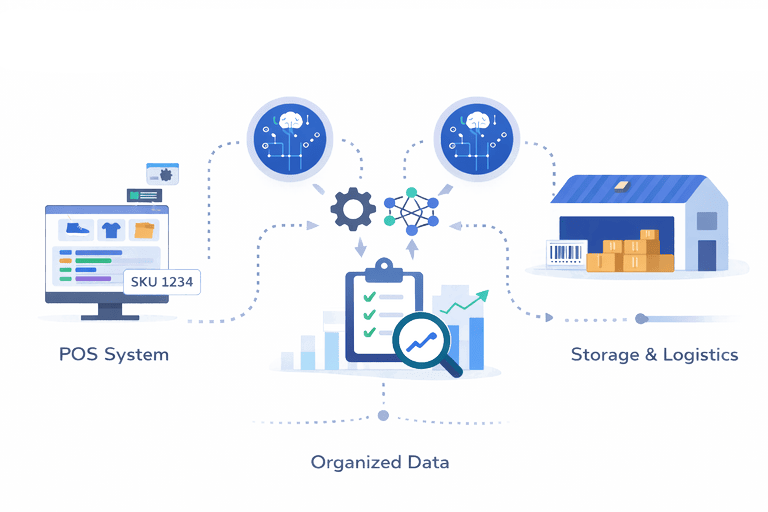
AI agents improve SKU‑level inventory decisions by working across existing retail systems and ensuring forecasting logic reflects real‑time operational conditions. Rather than replacing inventory platforms, they connect data sources and apply decision logic where forecasts are used.
Typical system connections include:
By maintaining consistent SKU‑level context across systems, AI agents ensure forecasts translate into actionable replenishment, allocation, and transfer decisions.
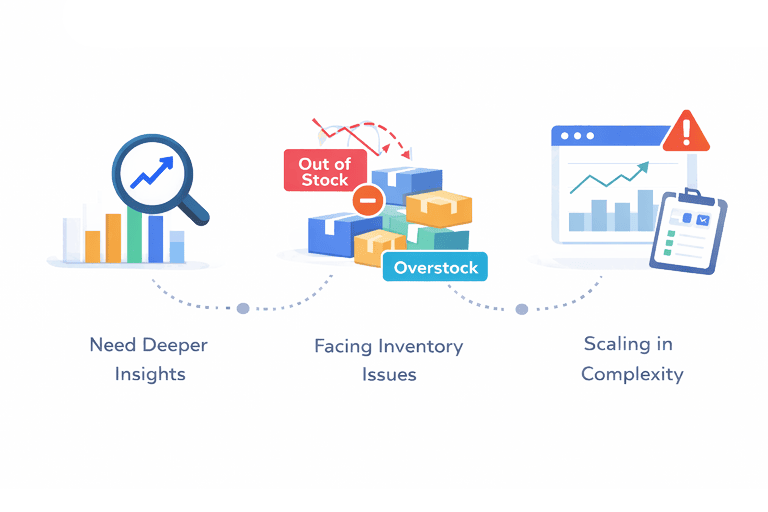
Retail teams typically explore AI agents when forecasting strain becomes visible across operations.
Common signals include:
When SKU‑level accuracy depends on manual intervention, risk and cost increase quietly.
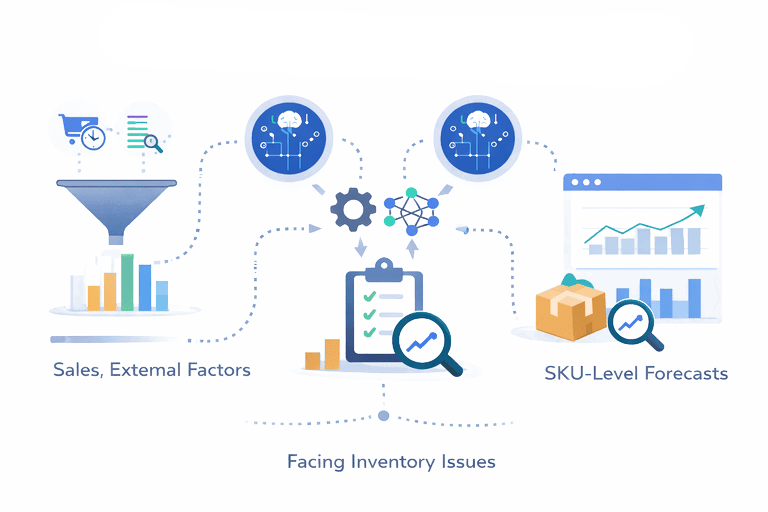
AI agents can be introduced without disrupting existing forecasting or planning tools. They support inventory, merchandising, and operations teams by improving visibility and decision quality at the SKU level.
Logicon designs and implements AI agents for retail teams by integrating inventory systems, defining access boundaries, and aligning forecasting workflows with real operational needs. The focus is on accuracy, traceability, and adoption rather than replacing core systems.
They align real‑time sales, inventory, and contextual data across systems, reducing gaps and delays that distort forecasts.
SKU‑level inventory forecasting fails when teams rely on fragmented data, delayed updates, and manual corrections. AI agents help retail teams forecast inventory more accurately by connecting systems, preserving context, and delivering explainable insights at the SKU level. For retailers managing complexity across stores and channels, AI agents provide a practical path to better inventory decisions without changing the systems they already depend on.