
Revenue teams invest heavily in events, but measuring their true impact is difficult when data is spread across marketing platforms, CRM systems, and post‑event reports. Without a reliable way to connect interactions to outcomes, teams struggle to prove ROI or improve future event strategy. AI agents help revenue teams reconcile event ROI by connecting data across systems, preserving context, and translating activity into measurable results.
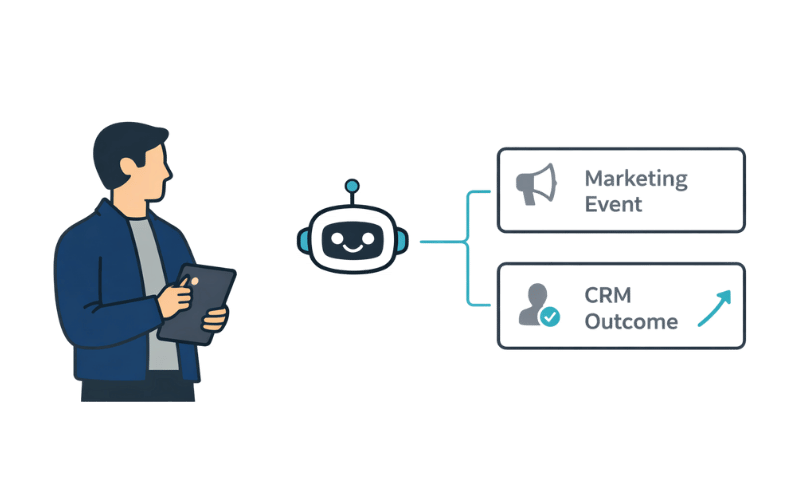
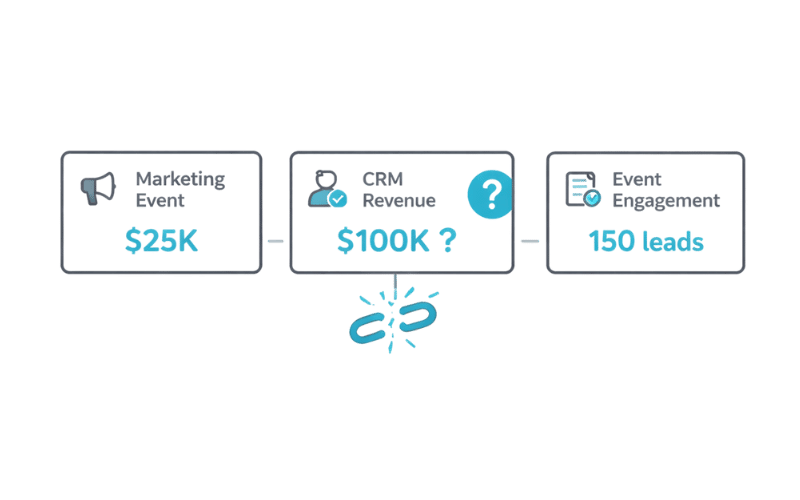
Event ROI does not break down because teams lack tools. It breaks down because each system captures only part of the story.
Marketing platforms track registrations, attendance, and campaigns. CRM systems track accounts, opportunities, and revenue. Event teams track conversations and engagement separately. When these systems are not aligned, revenue attribution becomes inconsistent.
Common challenges include:
As a result, revenue teams often rely on assumptions instead of evidence.
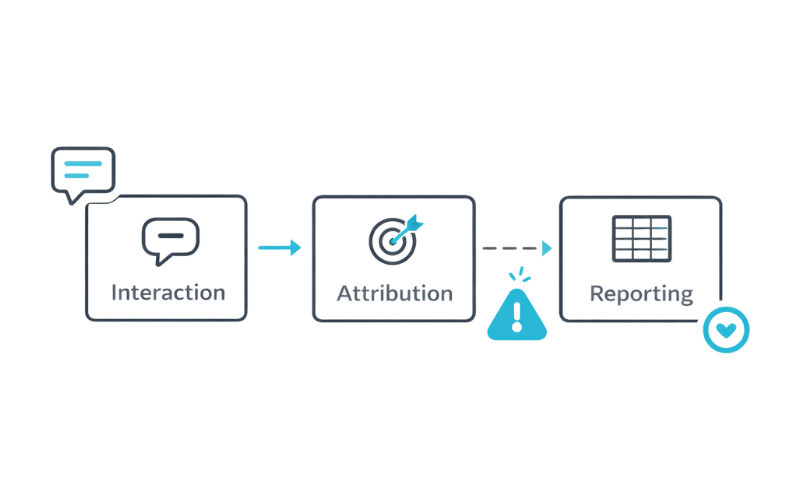
The fragmentation happens between interaction, attribution, and reporting. Events generate conversations and signals, but most systems only store structured fields.
Typical points of failure include:
When attribution depends on cleanup rather than capture, ROI accuracy drops.
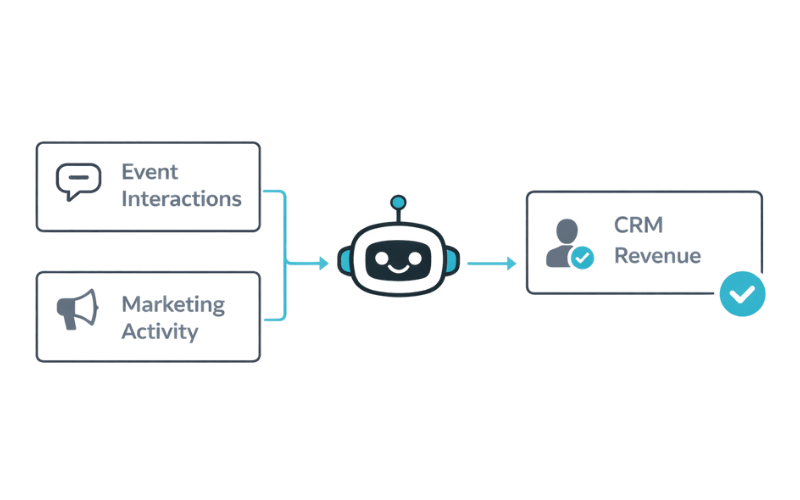
AI agents help revenue teams reconcile event ROI by connecting marketing activity, CRM records, and interaction data in near real time.
In practice, AI agents can:
This allows ROI to be calculated using evidence rather than assumptions.
With AI agents in place, revenue teams no longer depend on manual reporting cycles to understand event impact. ROI becomes visible as data moves through systems.
For example, after a trade show, an opportunity in the CRM can show which event the contact attended, which conversations were logged, and which follow‑up actions occurred. If the deal progresses weeks later, the AI agent preserves that event influence rather than losing it during pipeline updates.
In practice:
This gives revenue teams confidence in how event activity connects to outcomes.
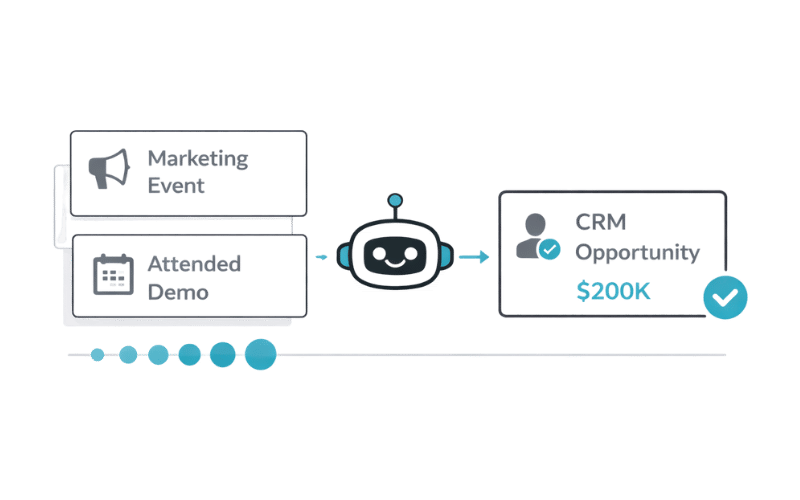
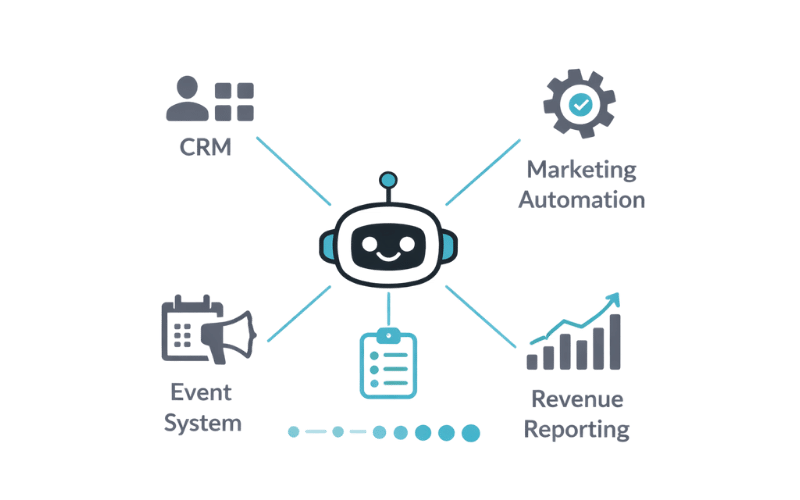
AI agents work alongside existing CRM and marketing tools to ensure event data is applied consistently and traceably.
Common integrations include:
Each attribution decision is logged and reviewable, allowing teams to trust ROI reports without relying on manual reconciliation.
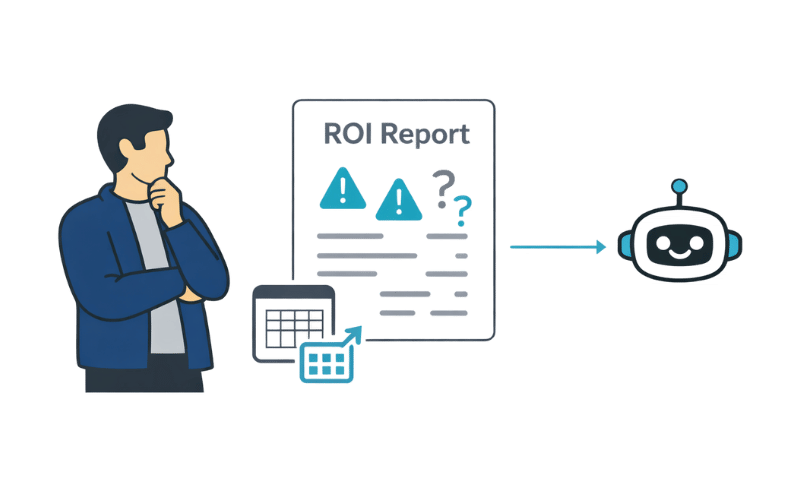
Teams typically explore AI agents when event performance becomes difficult to explain or defend.
Common signals include:
When ROI measurement becomes subjective, AI agents provide a more reliable alternative.
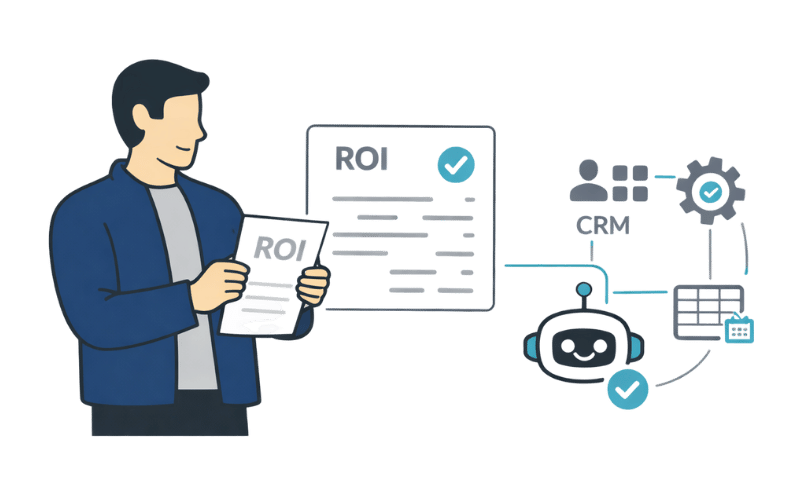
AI agents can be introduced without disrupting existing revenue workflows. They support marketing, sales, and revenue operations teams by aligning event data with pipeline and outcomes.
Logicon designs and implements AI agents that connect event data, CRM systems, and marketing platforms. The focus is on accuracy, transparency, and operational fit rather than automation for its own sake.
They connect interaction data, campaign activity, and CRM records, then apply consistent attribution logic to show how events influence pipeline and revenue.
No. They support existing tools by ensuring data is accurate, aligned, and complete.
AI agents are typically implemented by AI engineering teams like Logicon that specialize in system integration and workflow design.
Event ROI is difficult to measure when data is fragmented across marketing platforms, CRM systems, and event tools. Conversations lose value when they are not connected to outcomes. AI agents help revenue teams reconcile event ROI by capturing interaction context, aligning data across systems, and applying consistent attribution logic. This allows teams to understand what events actually contribute to revenue and make better decisions without changing the systems they already use.