
Manual handoffs between support, operations, and finance teams slow down issue resolution, increase errors, and create accountability gaps. These handoffs usually happen when information lives in separate systems and teams rely on tickets, emails, or spreadsheets to move work forward. AI agents reduce manual handoffs by capturing context, coordinating actions across systems, and routing work automatically based on intent and responsibility.
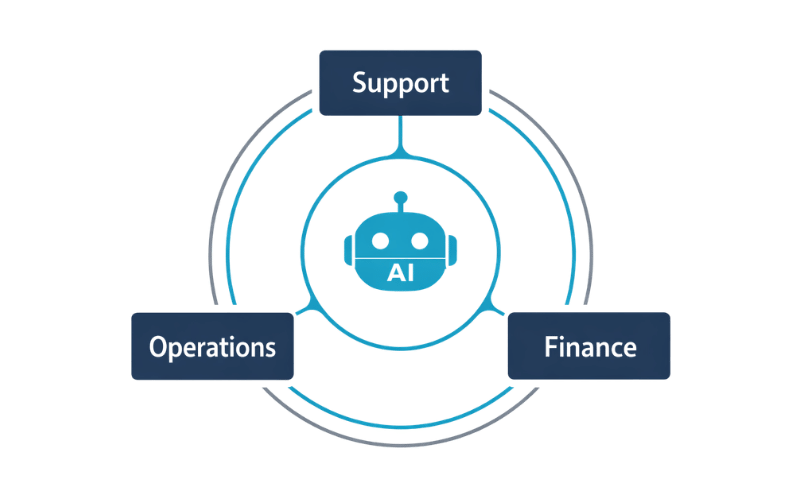
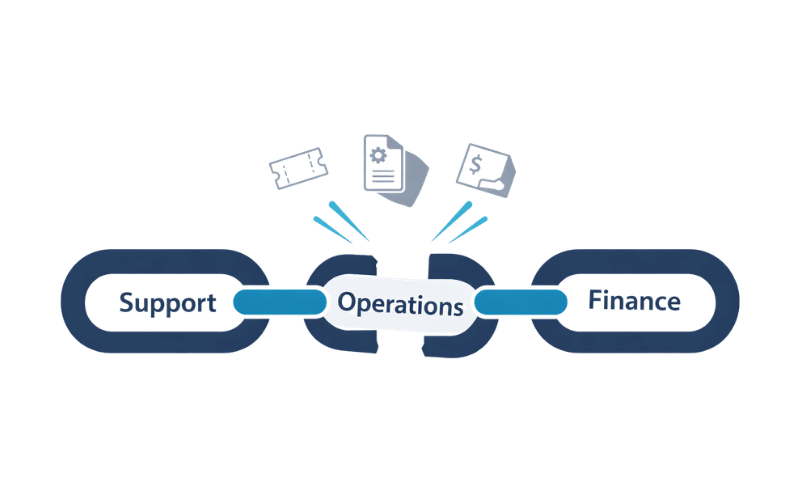
Manual handoffs introduce friction because each team works with different tools, priorities, and data formats. When information moves between teams manually, context is often lost or delayed.
Teams commonly experience:
As volume grows, these gaps compound and slow down resolution times.
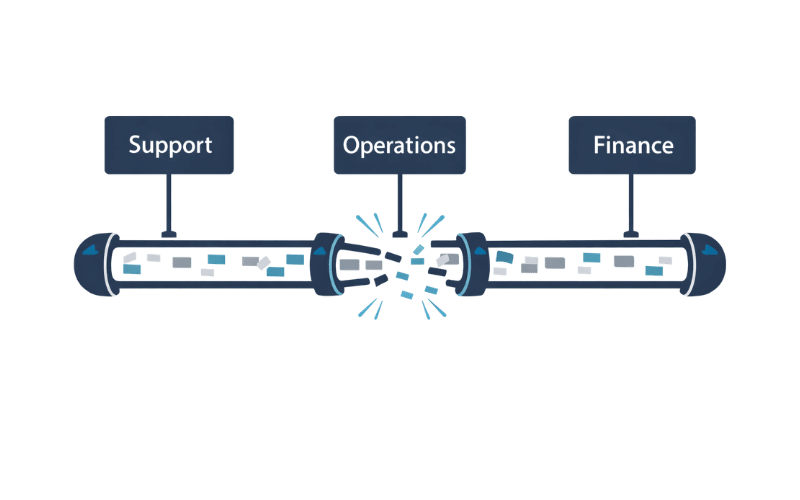
Handoffs happen when systems are not designed to share decision context. Most workflows move data, not understanding.
Common root causes include:
The result is repeated work and delayed decisions across teams.
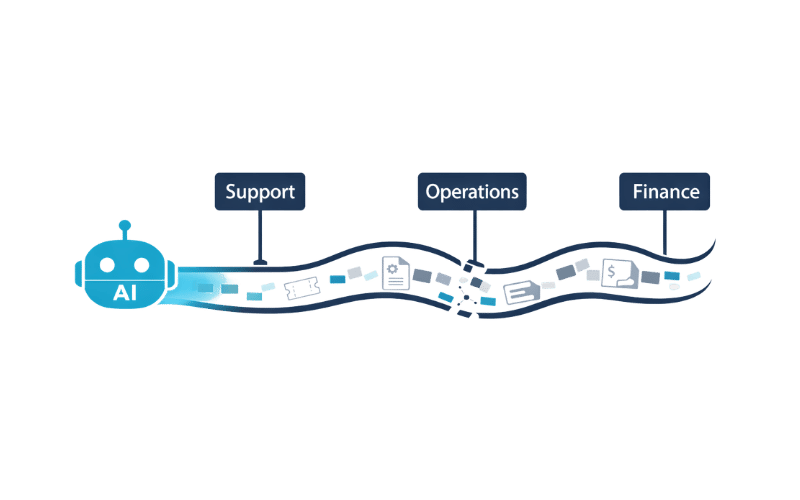
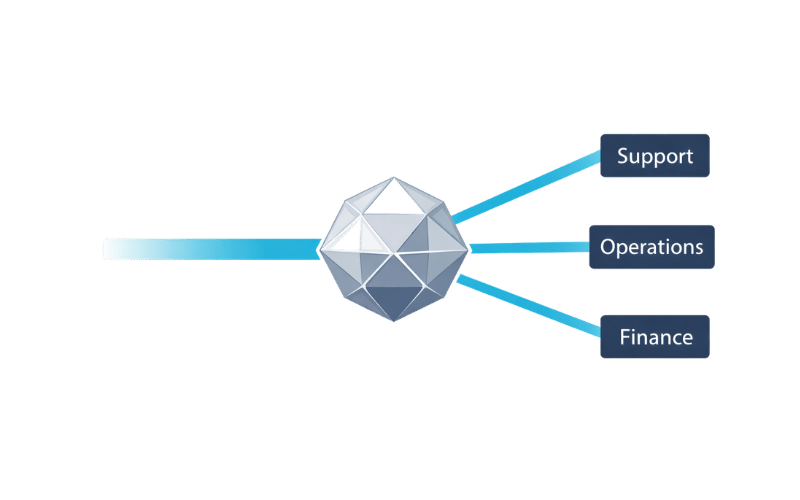
AI agents reduce handoffs by acting as a coordination layer across systems. They capture context once and reuse it wherever needed.
AI agents do this by:
This allows work to move forward without stopping at every team boundary.
With AI agents, workflows progress based on intent and rules instead of manual routing.
For example:
Each team works from the same shared understanding.
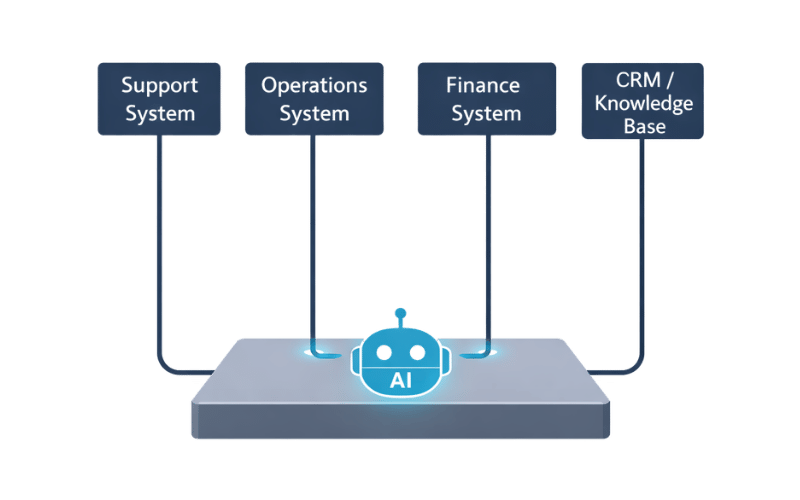
AI agents integrate with existing tools rather than replacing them. They sit between systems to ensure information flows correctly.
Typical connections include:
All actions follow permission‑based access and are logged for traceability.
Teams usually explore AI agents when coordination overhead becomes visible.
Common signals include:
These indicate that workflows need shared intelligence, not more process.
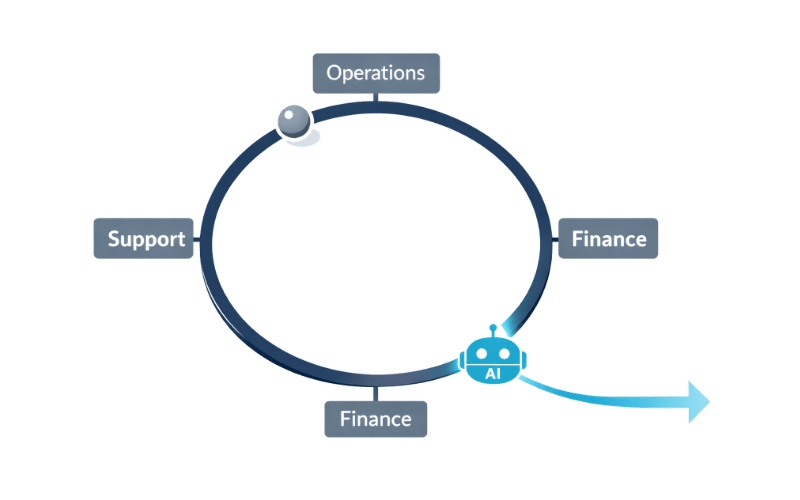
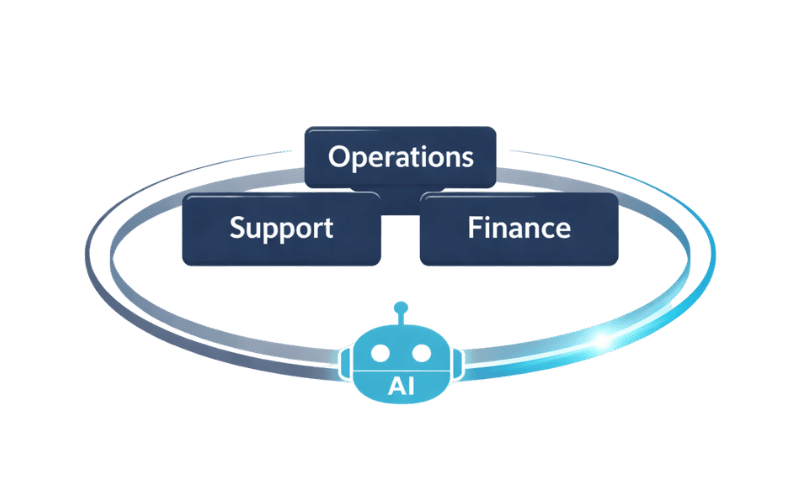
AI agents are introduced incrementally. They support teams without changing roles or forcing tool migrations.
Teams typically start by:
This ensures adoption without operational risk.
Manual handoffs slow down operations when teams rely on fragmented systems and incomplete context. AI agents reduce these handoffs by coordinating work across support, operations, and finance using shared intelligence. This leads to faster resolution, clearer ownership, and more reliable workflows without changing the systems teams already use.