
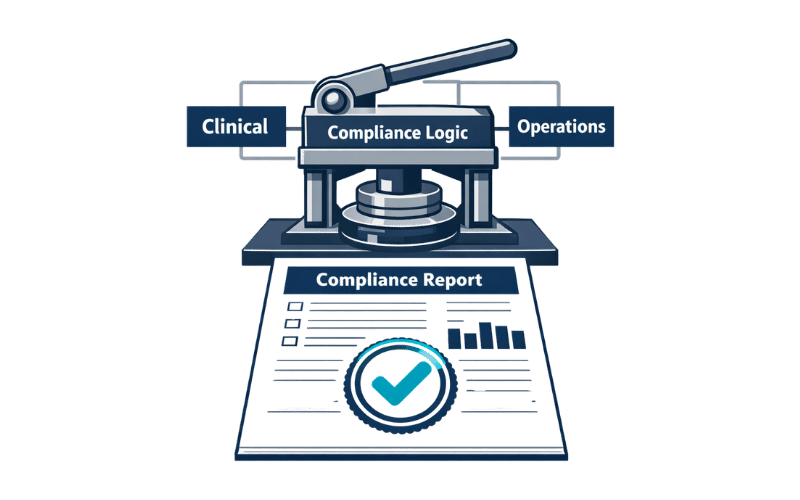
Healthtech compliance reporting requires accurate, explainable data across clinical, billing, and operational systems.
AI agents support this work by connecting approved systems, applying consistent compliance logic, and generating audit‑ready answers without relying on manual data pulls or spreadsheet reconciliation. This allows compliance teams to meet regulatory requirements faster while maintaining traceability and control.
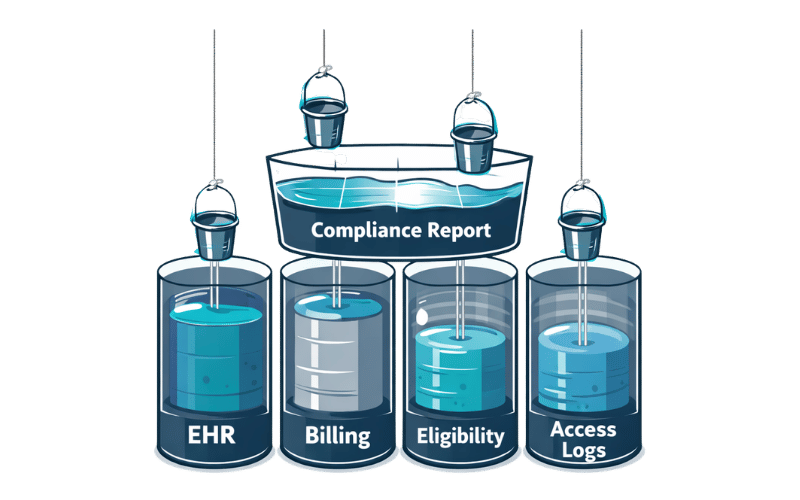
Healthtech compliance reporting often depends on analysts manually pulling data from EHRs, billing systems, eligibility platforms, and access‑log tools. Each system captures only part of the compliance picture and stores information in different formats.
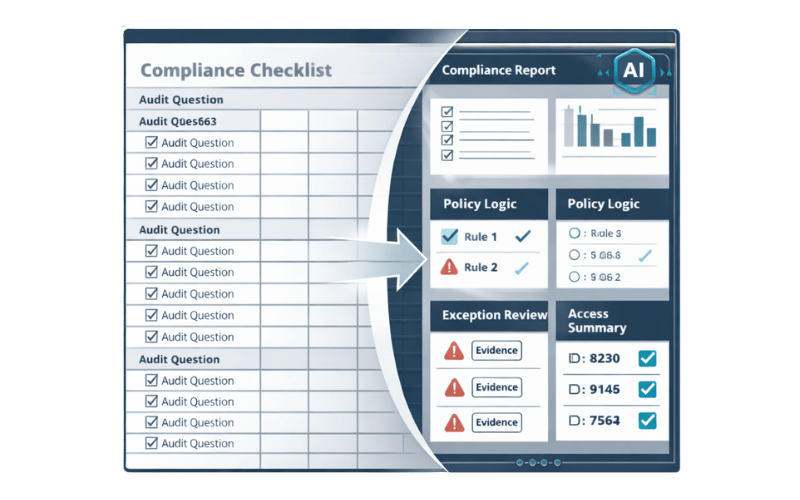
To meet audit or regulatory deadlines, teams export data into spreadsheets, reconcile discrepancies manually, and repeat the same work for every reporting cycle. This approach increases effort, delays reporting, and makes it difficult to explain results later.
Manual data pulls persist not because teams prefer them, but because systems were never designed to answer compliance questions together.
Compliance risk is not caused by missing data alone. It is caused by inconsistent interpretation of data across systems.
Common contributors include:
When regulators or auditors request clarification, teams often must repeat the entire reporting process, increasing risk and operational strain.
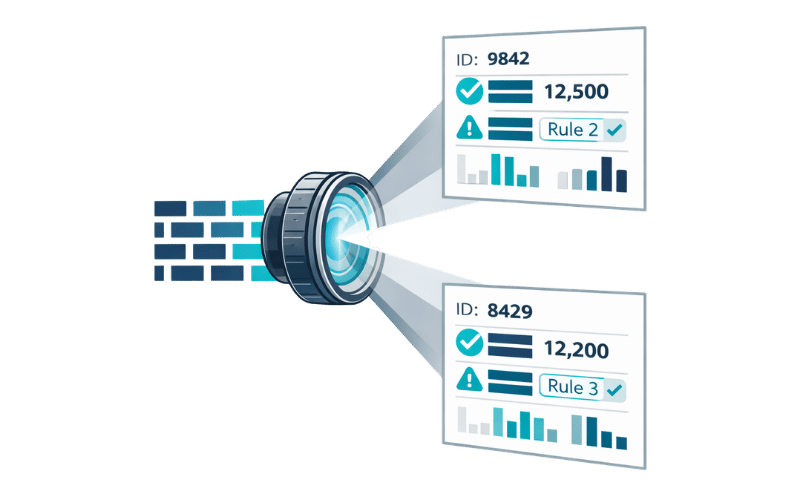
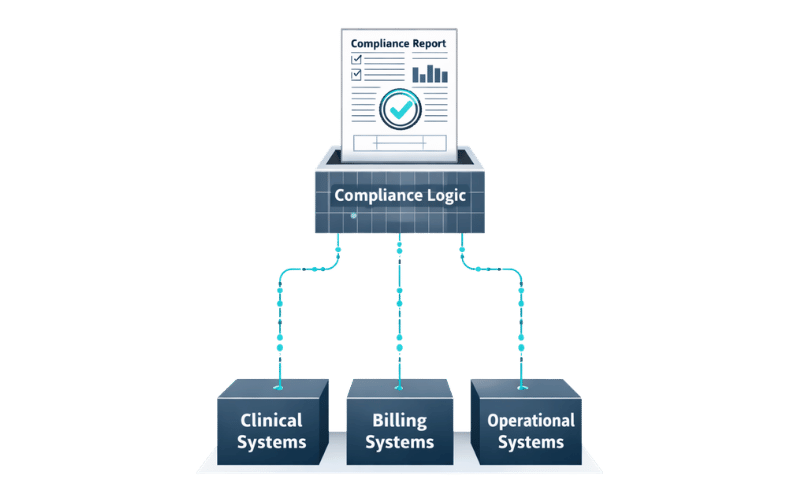
AI agents support compliance reporting by acting as a persistent reasoning layer across healthtech systems.
Instead of extracting data into spreadsheets, AI agents:
This allows teams to generate reports and explanations without rebuilding logic for every request.
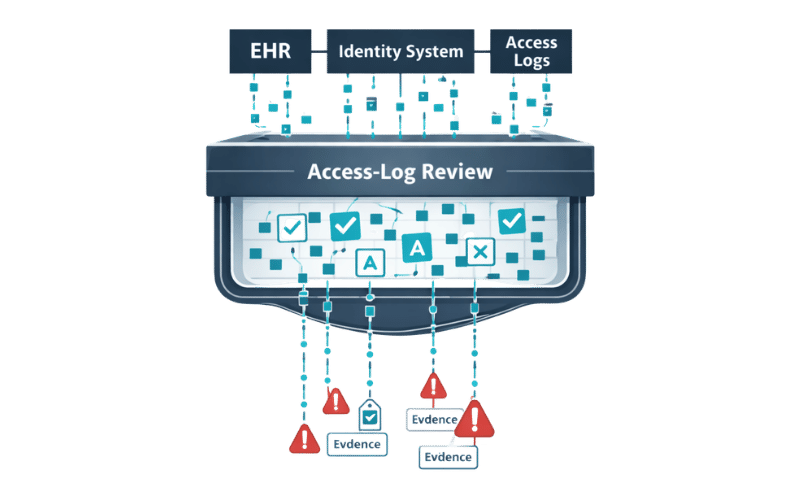
A compliance team preparing a monthly access‑log report must show which internal users accessed patient records and whether that access aligned with approved roles.
Without AI agents:
With AI agents:
The final report includes a clear audit trail without manual reconciliation.
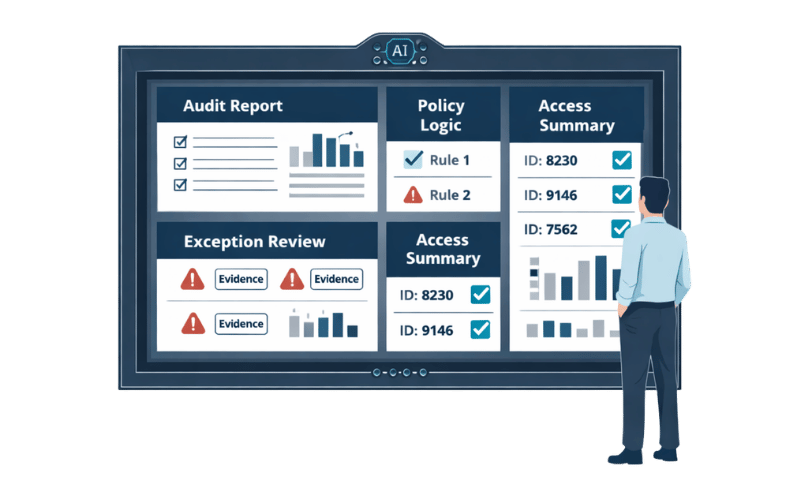
When AI agents support compliance reporting, teams move from reactive work to controlled, repeatable workflows.
Teams can:
Humans remain in control, while manual effort and uncertainty are reduced.
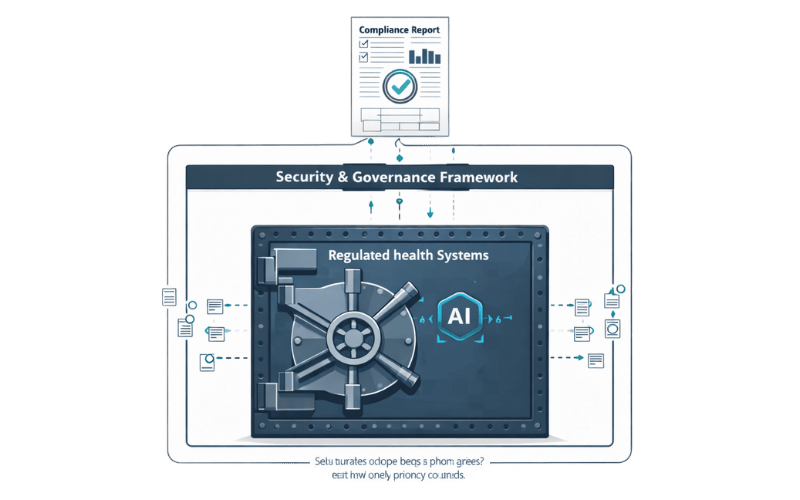
AI agents operate within existing security, privacy, and compliance frameworks.
Key safeguards include:
This ensures compliance reporting improves without introducing new operational or regulatory risk.
Manual data pulls become a liability when:
AI agents are most valuable when accuracy, speed, and traceability matter equally.
AI agents can apply different rule sets for different reporting requirements, as long as policies and definitions are clearly defined.
Healthtech compliance reporting breaks down when teams rely on manual data pulls to answer system‑level questions. AI agents support compliance reporting by connecting systems, enforcing consistent rules, and producing audit‑ready answers without spreadsheets. This enables healthtech teams to meet regulatory demands with clarity, speed, and confidence.