
Managing retail operations across multiple locations in Chicago requires constant coordination between stores, systems, and teams. Inventory status, staffing updates, order issues, and customer questions often live in different tools and update at different times. When information is fragmented, even routine decisions take longer than they should. AI agents help retail operations teams access accurate, location‑specific answers across systems without changing how existing tools are used.
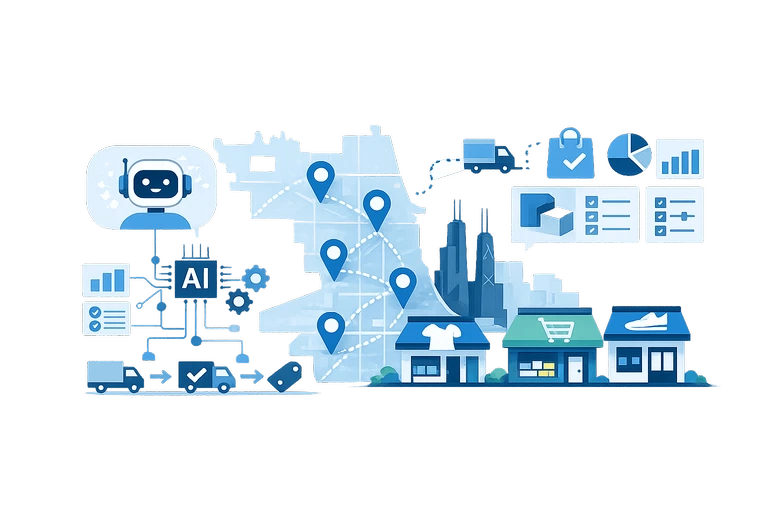
Retail operations become harder to manage as locations increase. Each store generates its own data, workflows, and exceptions, but decisions are still made centrally or under tight time constraints.
Common challenges include:
The issue is not a lack of systems. It is the effort required to reconcile information across locations in real time.
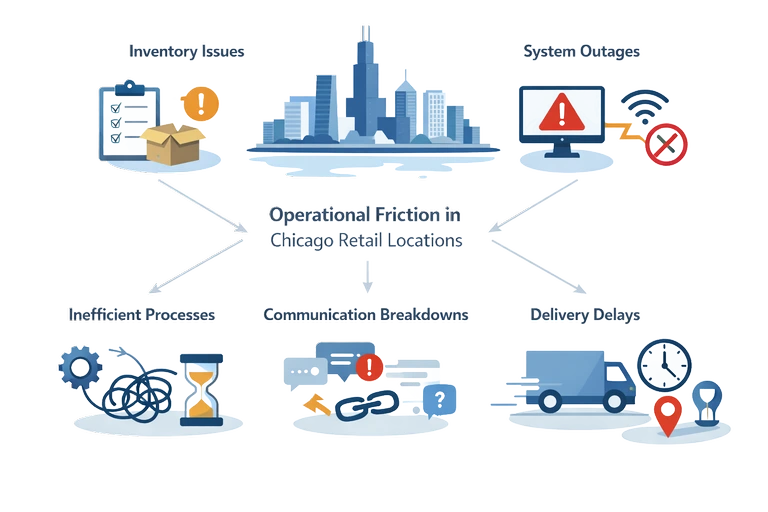
Operational friction usually appears when teams need answers that span more than one store or system.
Typical breakdowns include:
When information cannot be verified quickly, coordination slows and small issues turn into daily disruptions.
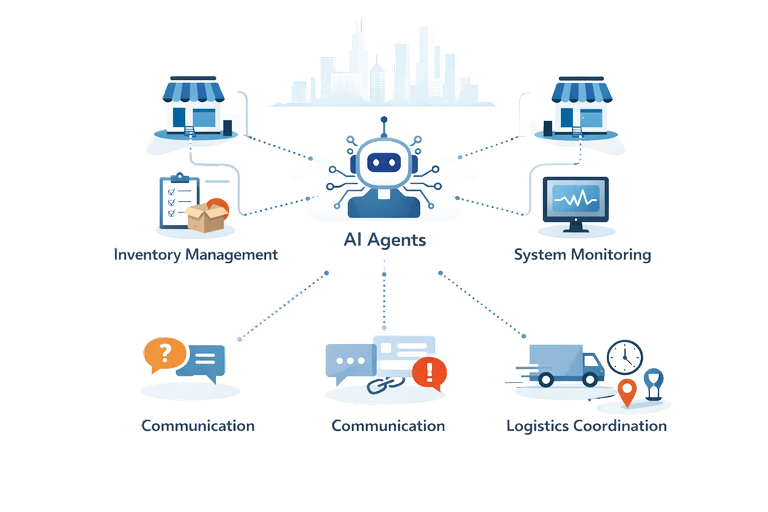
AI agents help retail operations teams retrieve accurate, approved information across stores and systems without manual investigation. They sit on top of existing tools and return clear answers based on live data.
In practice, AI agents can:
This allows teams to operate at scale without increasing complexity.
Instead of checking multiple dashboards or messaging store teams, operations leaders can ask a single operational question and receive a verified answer sourced from live systems.
For example:
Because answers are pulled from approved systems with location context, teams can act quickly without rechecking data or waiting for manual confirmation.
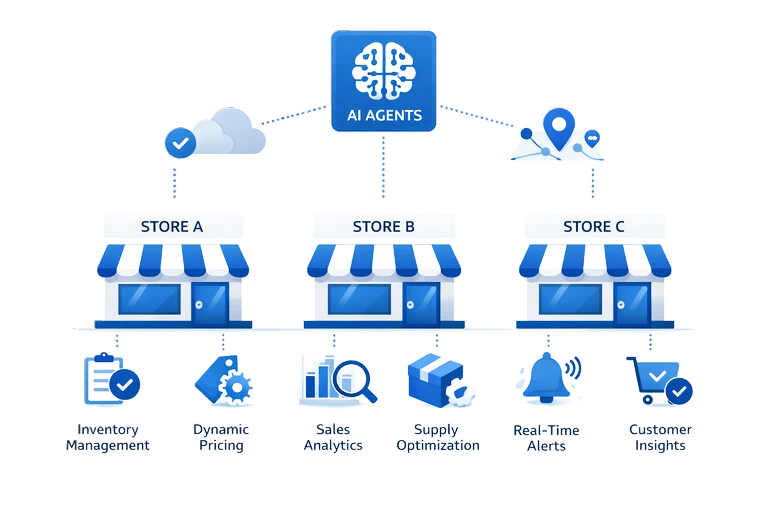
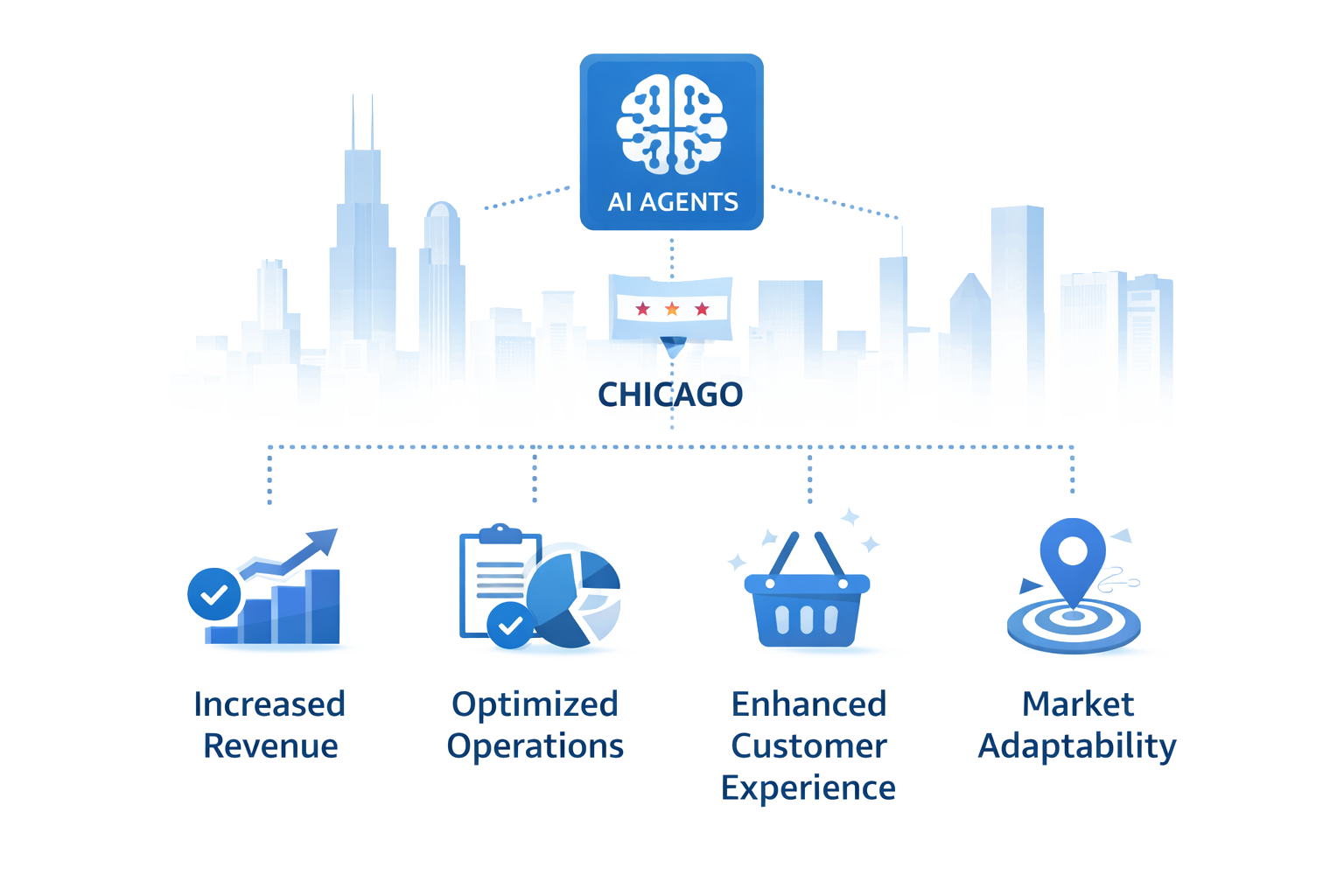
AI agents improve operational outcomes across store networks without changing store‑level workflows or systems.
Operations teams get immediate visibility into store‑level status without relying on manual updates.
Live data from connected systems reduces guesswork and prevents avoidable fulfillment and transfer issues.
Fewer repetitive questions allow store teams to focus on in‑store execution and customer experience.
Decisions are made using the same verified information, regardless of store count or location.
AI agents work within existing retail infrastructure and do not replace core platforms.
Typical integrations include:
All access follows permission‑based controls, ensuring store and corporate data remains governed.
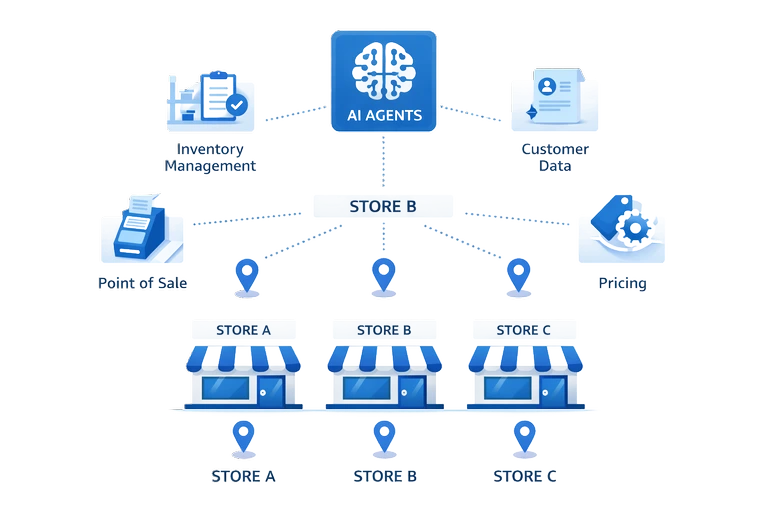

Retail teams often explore AI agents when operational strain becomes visible.
Common signals include:
When operations depend on manual verification, AI agents provide a scalable alternative.
Yes. AI agents retrieve store‑level data based on permissions and context.
Multi‑location retail operations break down when teams spend more time finding information than acting on it. As store networks grow across cities like Chicago, operational complexity increases quietly. AI agents restore clarity by giving retail teams fast, reliable answers across locations and systems without replacing existing tools. For retailers managing multiple stores, AI agents are becoming a practical foundation for consistent, scalable operations.